
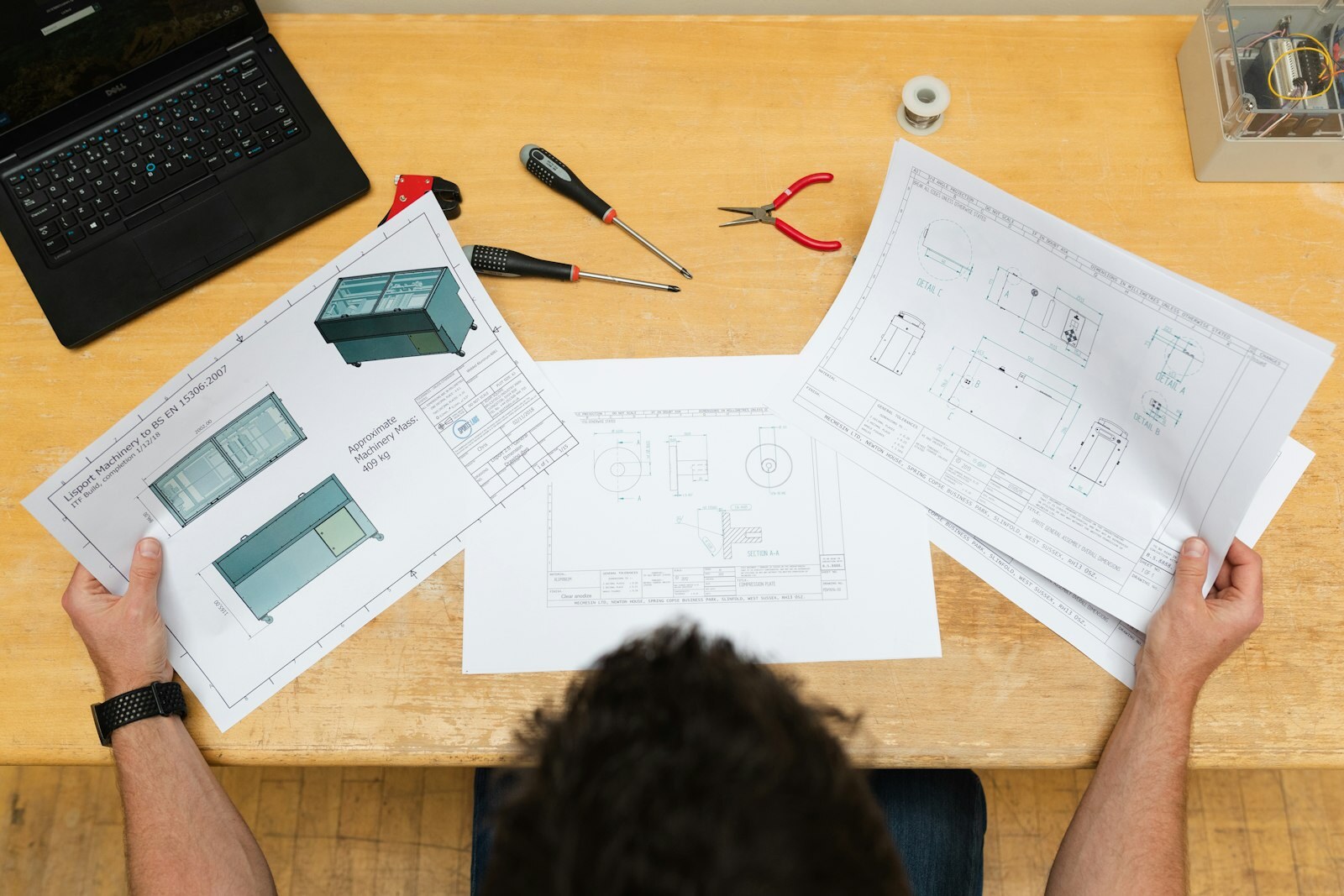
At Autodesk University 2026 in Las Vegas (September 15–17), Autodesk’s design-and-manufacturing stage was not another Assistant GA changelog. Jeff Kinder’s AU post and the Fusion demos centered on AutoTimeline and AutoAssemble: AI that turns dead imported solids into editable parametric parts, then finds connection points to orient and constrain assemblies—building on live AutoConstrain adoption rather than rehashing chat property edits.
Srinath Jonnalagadda, Autodesk’s VP of data solutions for D&M, called AutoTimeline “reverse-engineering the recipe for the geometry.” In Fusion terms that means a rebuilt timeline—feature history you can edit—on geometry that arrived as a dumb BREP. CEO Andrew Anagnost’s stage example was an autonomous-lawnmower bumper: AutoAssemble finds mate points and orients the stack while AutoTimeline generates an editable feature tree so the bumper is no longer a frozen import. Engineering.com notes peers like Backflip and CADfit already chase import-to-parametric; Autodesk’s bet is native Fusion quality at AU scale.
The same AU package stretches past part modeling. System Modeler targets manufacturing automation—machine setup, toolpath generation, and production prep as reusable automations—while Autodesk previewed an agentic PLM experience to connect product data and requirements, find reusable work, and keep information current. Inventor will become the first Fusion Connected Client, linking desktop Inventor/iLogic workflows to Fusion cloud data; Vault gets natural-language Assistant search to suggest existing parts instead of reinventing every project.
Timing matters for buyers. Autodesk Assistant GA already shipped in the September 2026 Fusion update; AU’s AutoTimeline/AutoAssemble class is still preview/roadmap, with Engineering.com reporting D&M AI feature rollout details pointed at 2027. Autodesk also clarified that Mike Haley’s “still an exploration / not in the product yet” line applied to research Project Quill—not to neural-CAD umbrellas that already include live AutoConstrain. Separately, Backflip expanded mesh-to-CAD with drawing-to-CAD and photo-to-CAD into Fusion’s plugin—another import-recovery path shops will compare.

For industrial CAD and CAM teams, the practical test is trust on recovered features and mates: wrong AutoTimeline history or a bad AutoAssemble constraint is expensive once it hits the floor. Agentic PLM and Inventor-as-Fusion-client deepen the cloud tether—great for reuse search, risky when IP and offline cells cannot wait on Autodesk’s agent.
For N23D, import recovery and assembly intent are the right pressures—every shop fights dumb STEP files—but the answer should not be a rented neural timeline you cannot audit offline. N23D targets one native Rust binary: local-first parametric CAD, vaulted revisions, and CAM/PLM on geometry you own, so feature history stays yours when the cloud demo ends.
Sources/References
- Autodesk News — Autodesk advances AI for design and manufacturing at AU 2026 (Jeff Kinder, September 15, 2026)
- Engineering.com — AU 2026: Autodesk’s AI Assistant is evolving (September 15, 2026; corrections September 22)
- Engineering.com — Fusion news and more from AU 2026 (September 16, 2026)
- Engineering.com — Multiphysics gets MCP server and Onshape gets SimScale agent (September 23, 2026 — AU neural-CAD corrections + Backflip note)
- N23D — CAD stack page
- N23D — CAM stack page
- N23D — PLM stack page