Honda and Rescale expanded their strategic partnership on October 14, 2026 under a new multi-year agreement. The automaker is deepening use of the Rescale platform to scale simulation capacity, modernize engineering workflows, and harden the foundation for next-generation vehicle programs — classic CAE work moving onto cloud HPC instead of waiting on fixed clusters.
Tomoaki Utsunomiya, chief engineer for Auto Development Engineering Systems at Honda, put the pressure plainly: more complexity, faster cycles, and the need to explore more possibilities earlier. Rescale’s pitch is elastic capacity plus AI physics and agentic workflows so teams are not capped by queue depth when a vehicle program spikes. A joint benchmark validation process was used to prove the platform on Honda’s hardest simulation jobs before the broader rollout.
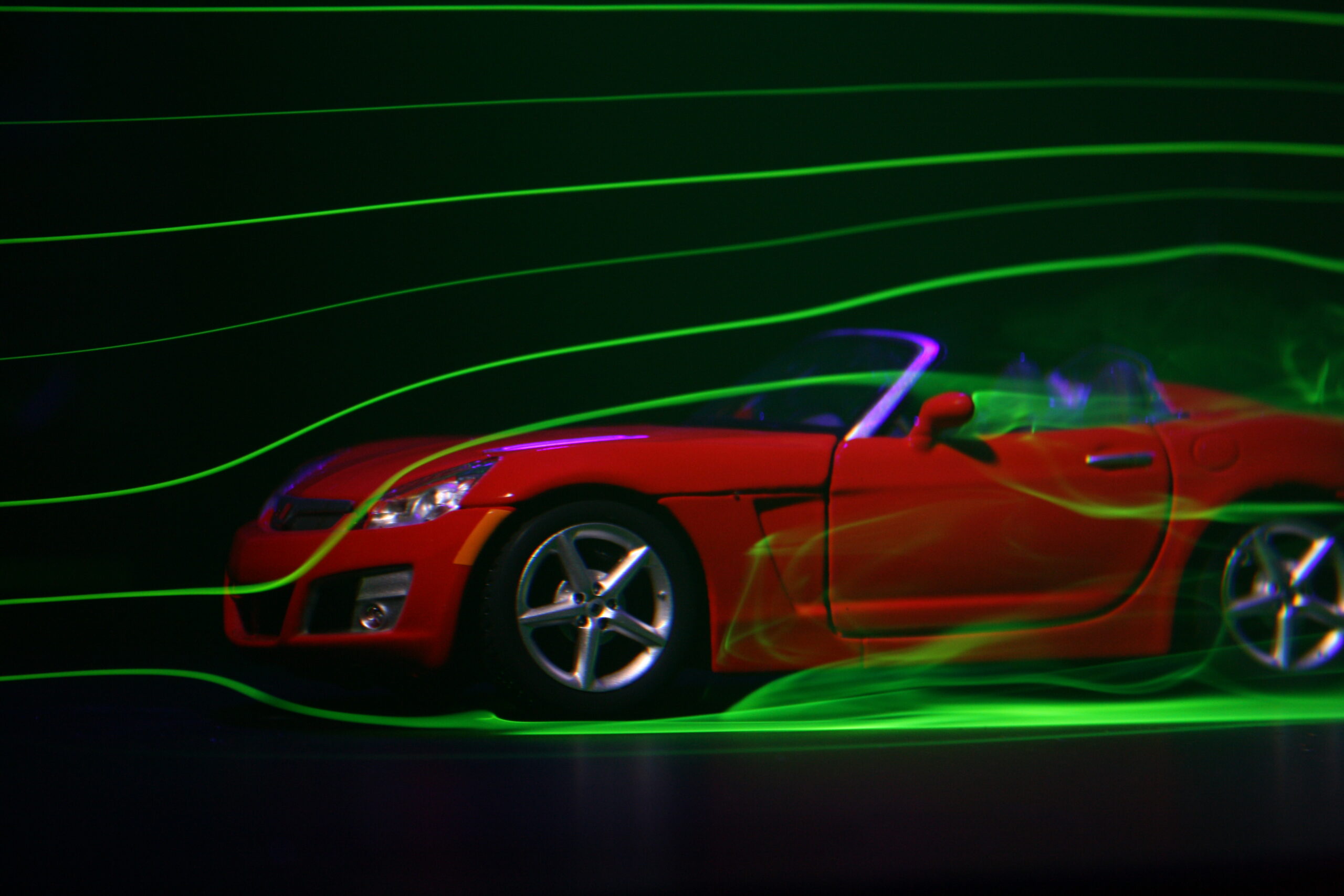

What Honda is buying is not “more cores” alone. Rescale bundles intelligent HPC, modeling and simulation, agentic digital engineering, and AI physics so surrogate models trained on a company’s own solver data can screen thousands of candidates while full-fidelity FEA/CFD stays the validation gate. For automotive NVH, crash, aero, and thermal stacks, that split — cheap exploration, expensive prove-out — is the difference between one design freeze and three.
The same week, the wider CAE market kept pushing physics-aware AI. Siemens Simcenter PhysicsAI (Oct. 8) trains geometric deep-learning models on existing Optistruct, Radioss, Nastran, and STAR-CCM+ results to predict full 3D fields in seconds. Dassault’s SIMULIA R2026x FD04 (deployed Oct. 10) trains Virtual Twin Physics Behavior models from high-fidelity FEA inside 3DEXPERIENCE and adds 4K cloud result streaming. Honda–Rescale is the OEM-scale version of that pattern.

For N23D, the lesson is solver-honest CAE tied to CAD and PLM: elastic compute and AI surrogates only help when geometry, materials, and revision identity stay consistent from sketch to release. Scaling the queue without scaling the digital thread just produces more orphaned result files.
Cloud CAE deals like this one will keep landing as OEMs treat simulation throughput as a product-development bottleneck, not an IT cost center. The teams that win will keep full-physics solvers as the referee and use AI physics to decide which runs deserve the referee’s time.
Sources
- Rescale: Honda expands strategic partnership to accelerate product development (Oct. 14, 2026)
- Siemens: Use existing structural and fluid data to train Simcenter PhysicsAI (Oct. 8, 2026)
- SimTool: 3DEXPERIENCE SIMULIA R2026x FD04 — ML Virtual Twin & 4K Cloud (Oct. 15, 2026)
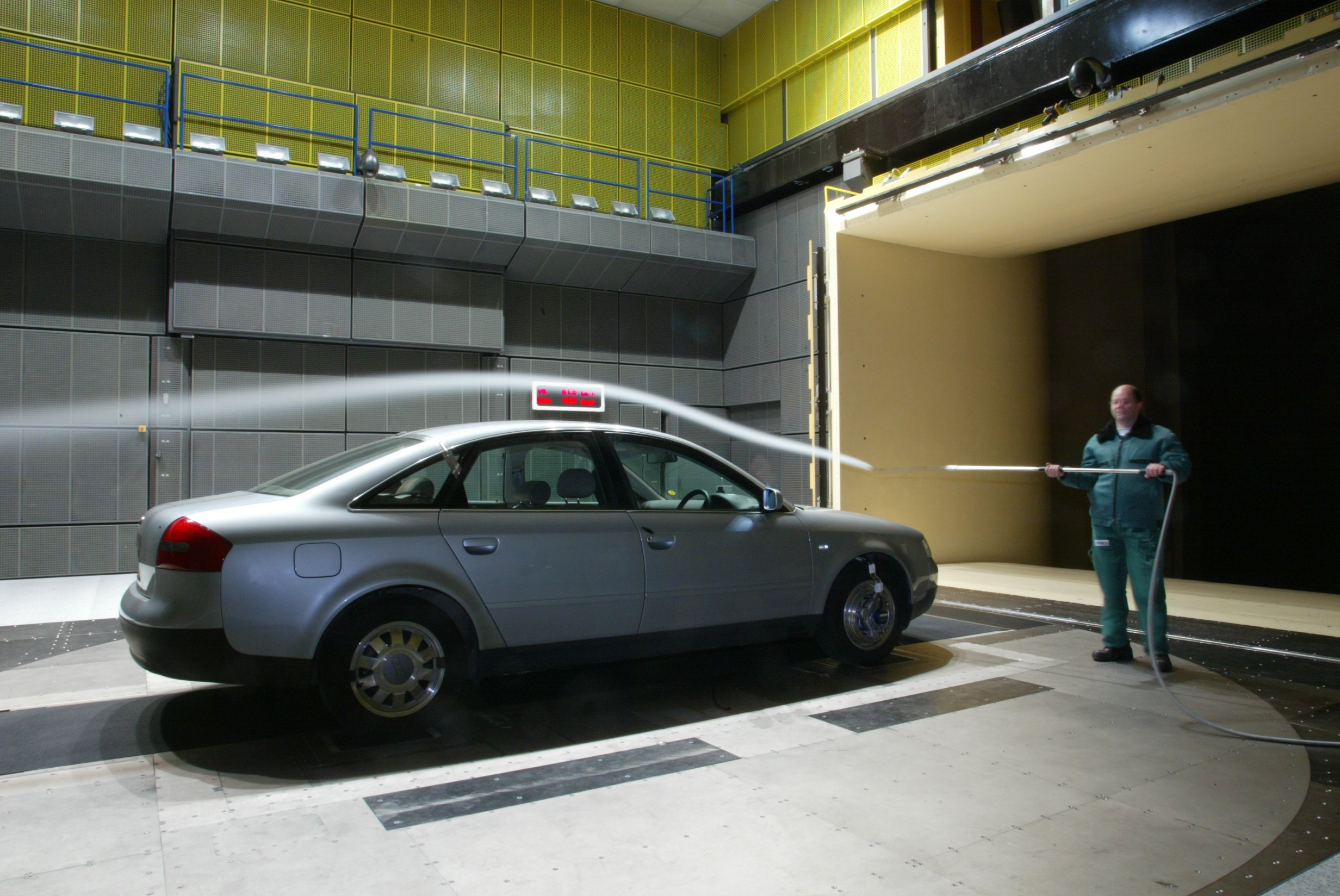
Featured photo: Aeroakustik-Windkanal-Messhalle via Wikimedia Commons.
