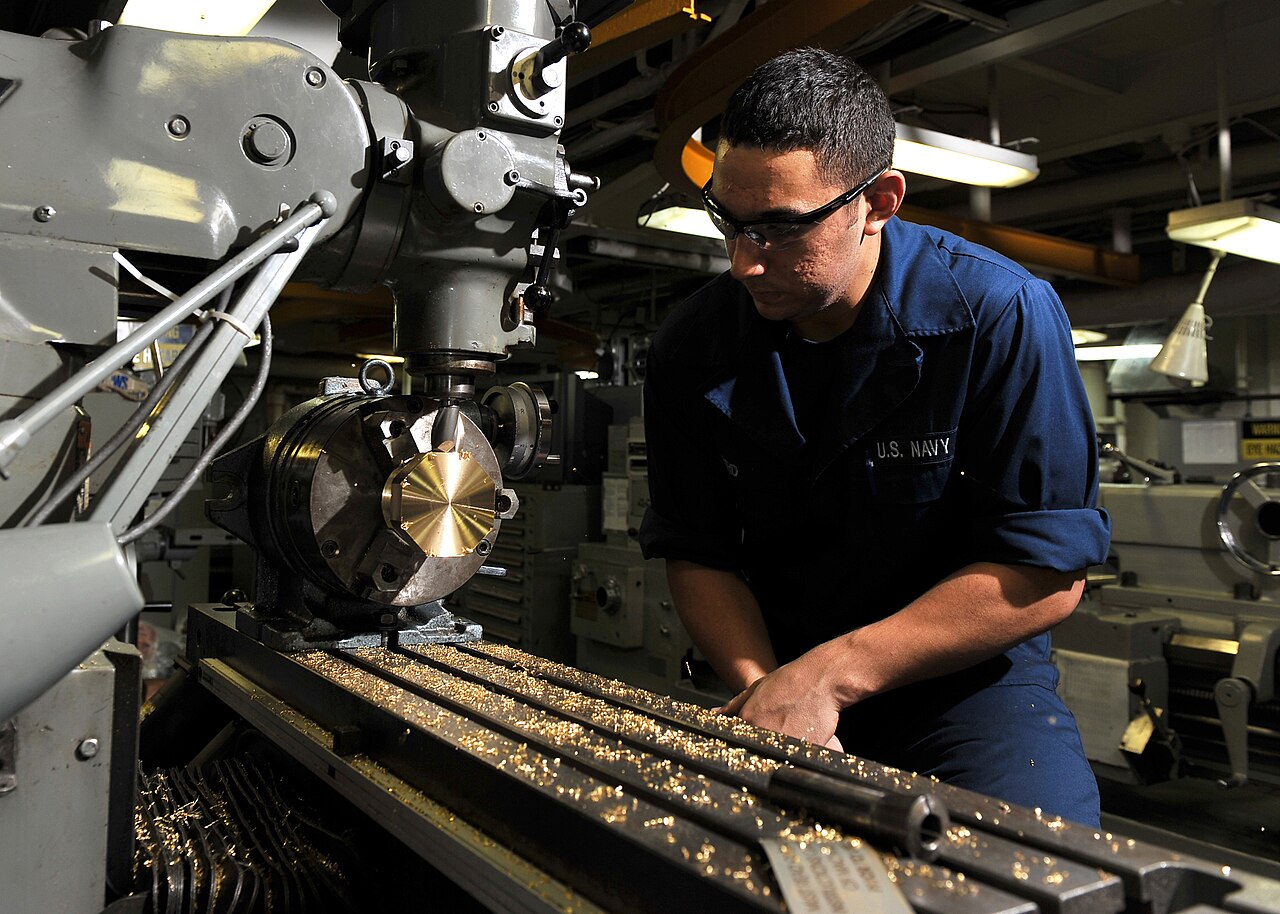
The sailor in the photo above is shaping a valve plug in the machine shop of the aircraft carrier USS Abraham Lincoln, somewhere in the Pacific. Plenty of real manufacturing happens in places like that: ships at sea, defense shops behind an air gap, plants at the end of a slow rural line. Yet more and more design software assumes a live login to the vendor’s servers before it will open a part.
That assumption has a price, and the vendor doesn’t pay it. When the license server, the sign-in service or the vendor’s cloud has a bad afternoon, your engineers stop. When your files live in the vendor’s data center, in the vendor’s format, behind the vendor’s account, leaving means asking permission to take your own work with you. None of that shows up on the quote. It shows up on the day the spinner doesn’t stop.
So here is the claim. Software that can’t open your own part without checking in with someone else’s computer isn’t a tool you own. It’s a lease on your designs. Working offline should be the default, not a feature: the record lives on your hardware, syncing is something you choose to turn on, and an outage on the vendor’s side stays the vendor’s problem.
N23D is being built that way. It’s one native Rust binary that runs on your own machines, with CAD, CAM and PLM reading one local record, and it’s planned to be sold as a permanent license. One platform. Full digital thread. Thirteen vendors means thirteen servers that all have to be up before you can cut a chip.
Featured photo: Fireman Kyle Byrd shapes a valve plug in the machine shop aboard USS Abraham Lincoln (CVN 72), Pacific Ocean, Feb. 25, 2011. U.S. Navy photo by Mass Communication Specialist Seaman Adam Randolph, public domain, via Wikimedia Commons.
