The three stories point at the same seam. An outside agent that can act on Kinetic business logic through MCP, check whether a BOM is ready for launch or execute a standardized production order only helps if it is reading the released product record — the same revision, the same routing and the same permissions a person would use. Headless ERP and shop-floor standardization are useful. They still fail if the agent acts on a BOM that engineering has already superseded, or if a work-definition change skips the approval the new Oracle workflow is meant to catch.
N23D puts ERP in the same Rust application as CAD, PLM and MES, so an agent asking whether a BOM is ready for launch is looking at the geometry, the approved change and the work order — not a copy passed between products. Purchase orders, inventory and the released part are one record. Agents get the same permissions and approval history as people. There is no separate headless layer to bolt on, because the business logic and the product data were never split apart.
Sources
- Epicor Named a Leader in the 2026 IDC MarketScape for Worldwide AI-Enabled Manufacturing ERP, Epicor (Nov. 5, 2026)
- Oracle Fusion Cloud SCM 26D: Advancing Supply Chain Execution with Fusion Claw, Oracle (Nov. 6, 2026)
- What Manufacturers Can Learn from ifm’s Digital Manufacturing Journey, SAP News Center (Nov. 6, 2026)
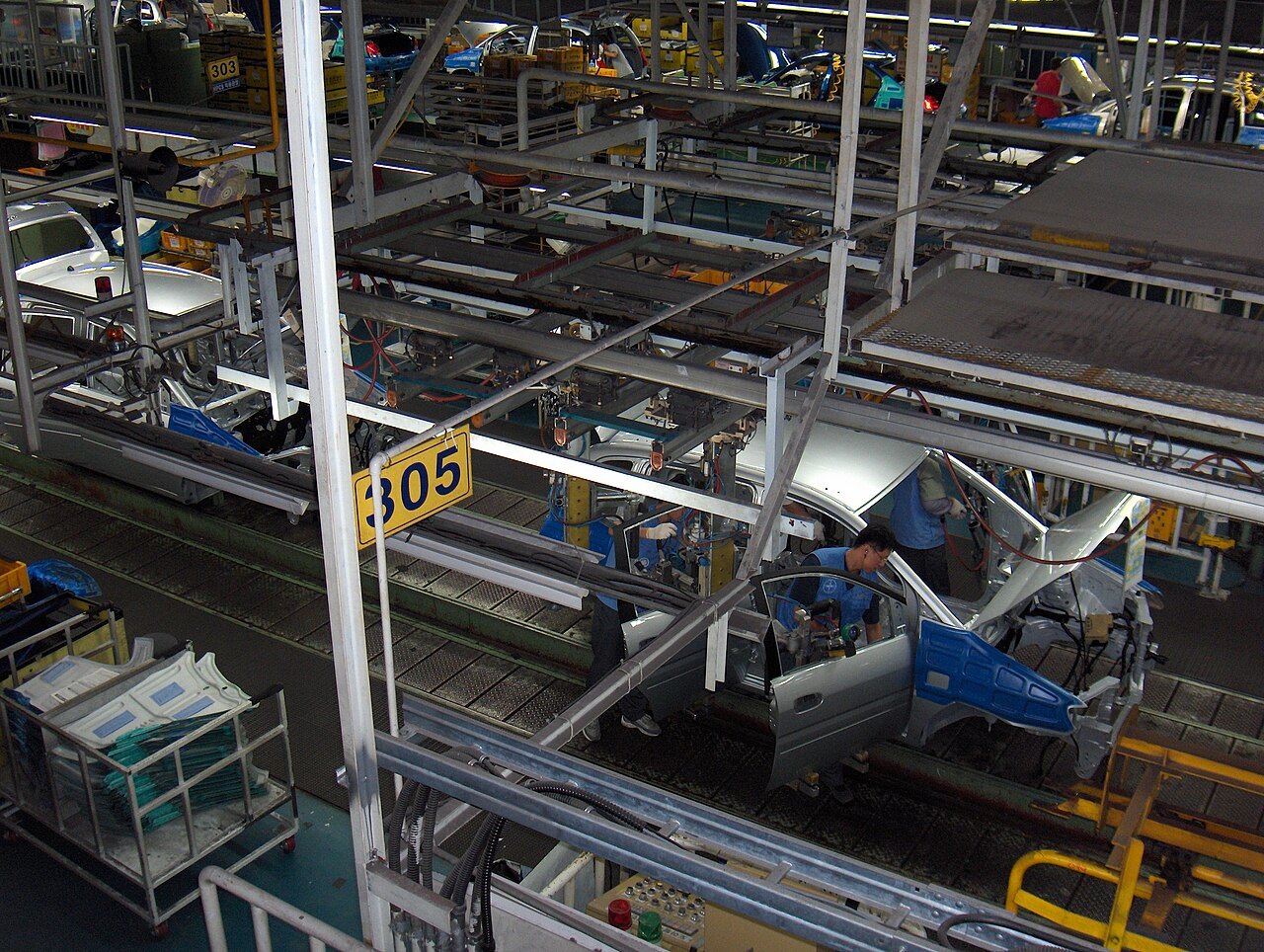
Featured photo: Assembly line at Hyundai Motor Company’s factory in Ulsan, South Korea. Photo: Anonyme, CC BY 2.5, via Wikimedia Commons.
Oracle made a related move on Nov. 6 with Fusion Cloud SCM 26D. The headline capability is Fusion Claw, which helps AI applications analyze issues, plan actions and carry work through to completion inside established business controls. A product team can ask whether a bill of materials is ready for launch; Fusion Claw gathers the relevant information, evaluates options against business constraints, recommends next steps and can carry out actions while people keep control of goals, policies and important approvals. In 26D it powers the Product Readiness Workspace, Sourcing Command Center and Supply Planning Allocation Workspace. The same release adds centralized production-campaign management to cut changeover effort, shelf-life planning that matches supply to customer freshness requirements, approval workflows for work-definition changes and barcode scanning for work-in-process inspections.
Sensor and automation maker ifm electronic GmbH, with around 9,000 employees and production sites in Germany and abroad, landed in a more familiar place: too many site-specific links between shop-floor equipment and enterprise software. Evaluating manufacturing execution systems, ifm picked SAP Digital Manufacturing and found that production-order execution, scheduling and track-and-trace — and the majority of more than 100 internally developed functionalities — were already available as standard. “Our OT colleagues were actually surprised that it’s just parameterizing and the solution is there,” said Martin Haury, head of Global IT Business Services. After a successful pilot with partner cbs Corporate Business Solutions, ifm is preparing to expand the system across its global network.
The three stories point at the same seam. An outside agent that can act on Kinetic business logic through MCP, check whether a BOM is ready for launch or execute a standardized production order only helps if it is reading the released product record — the same revision, the same routing and the same permissions a person would use. Headless ERP and shop-floor standardization are useful. They still fail if the agent acts on a BOM that engineering has already superseded, or if a work-definition change skips the approval the new Oracle workflow is meant to catch.
N23D puts ERP in the same Rust application as CAD, PLM and MES, so an agent asking whether a BOM is ready for launch is looking at the geometry, the approved change and the work order — not a copy passed between products. Purchase orders, inventory and the released part are one record. Agents get the same permissions and approval history as people. There is no separate headless layer to bolt on, because the business logic and the product data were never split apart.
Sources
- Epicor Named a Leader in the 2026 IDC MarketScape for Worldwide AI-Enabled Manufacturing ERP, Epicor (Nov. 5, 2026)
- Oracle Fusion Cloud SCM 26D: Advancing Supply Chain Execution with Fusion Claw, Oracle (Nov. 6, 2026)
- What Manufacturers Can Learn from ifm’s Digital Manufacturing Journey, SAP News Center (Nov. 6, 2026)
Featured photo: Assembly line at Hyundai Motor Company’s factory in Ulsan, South Korea. Photo: Anonyme, CC BY 2.5, via Wikimedia Commons.
Oracle made a related move on Nov. 6 with Fusion Cloud SCM 26D. The headline capability is Fusion Claw, which helps AI applications analyze issues, plan actions and carry work through to completion inside established business controls. A product team can ask whether a bill of materials is ready for launch; Fusion Claw gathers the relevant information, evaluates options against business constraints, recommends next steps and can carry out actions while people keep control of goals, policies and important approvals. In 26D it powers the Product Readiness Workspace, Sourcing Command Center and Supply Planning Allocation Workspace. The same release adds centralized production-campaign management to cut changeover effort, shelf-life planning that matches supply to customer freshness requirements, approval workflows for work-definition changes and barcode scanning for work-in-process inspections.
Sensor and automation maker ifm electronic GmbH, with around 9,000 employees and production sites in Germany and abroad, landed in a more familiar place: too many site-specific links between shop-floor equipment and enterprise software. Evaluating manufacturing execution systems, ifm picked SAP Digital Manufacturing and found that production-order execution, scheduling and track-and-trace — and the majority of more than 100 internally developed functionalities — were already available as standard. “Our OT colleagues were actually surprised that it’s just parameterizing and the solution is there,” said Martin Haury, head of Global IT Business Services. After a successful pilot with partner cbs Corporate Business Solutions, ifm is preparing to expand the system across its global network.
The three stories point at the same seam. An outside agent that can act on Kinetic business logic through MCP, check whether a BOM is ready for launch or execute a standardized production order only helps if it is reading the released product record — the same revision, the same routing and the same permissions a person would use. Headless ERP and shop-floor standardization are useful. They still fail if the agent acts on a BOM that engineering has already superseded, or if a work-definition change skips the approval the new Oracle workflow is meant to catch.
N23D puts ERP in the same Rust application as CAD, PLM and MES, so an agent asking whether a BOM is ready for launch is looking at the geometry, the approved change and the work order — not a copy passed between products. Purchase orders, inventory and the released part are one record. Agents get the same permissions and approval history as people. There is no separate headless layer to bolt on, because the business logic and the product data were never split apart.
Sources
- Epicor Named a Leader in the 2026 IDC MarketScape for Worldwide AI-Enabled Manufacturing ERP, Epicor (Nov. 5, 2026)
- Oracle Fusion Cloud SCM 26D: Advancing Supply Chain Execution with Fusion Claw, Oracle (Nov. 6, 2026)
- What Manufacturers Can Learn from ifm’s Digital Manufacturing Journey, SAP News Center (Nov. 6, 2026)
Featured photo: Assembly line at Hyundai Motor Company’s factory in Ulsan, South Korea. Photo: Anonyme, CC BY 2.5, via Wikimedia Commons.
Epicor Prism embeds industry-specific agents in Kinetic workflows so teams can ask questions of live ERP data, get the “why” behind it and act without leaving the work. Those agents already handle natural-language queries, anomaly detection and automated actions. Lux is the governed framework for designing and securing agents, and Prism Agent Foundry will let customers and partners build, verify and share their own. Kinetic runs cloud-native on Microsoft Azure, with hybrid still supported. Epicor says about 87% of new customers choose the cloud and 82% of existing customers have moved from on-premises deployments. Through Ascend with Epicor, qualified customers can get core business workflows running in as little as 90 days.

Oracle made a related move on Nov. 6 with Fusion Cloud SCM 26D. The headline capability is Fusion Claw, which helps AI applications analyze issues, plan actions and carry work through to completion inside established business controls. A product team can ask whether a bill of materials is ready for launch; Fusion Claw gathers the relevant information, evaluates options against business constraints, recommends next steps and can carry out actions while people keep control of goals, policies and important approvals. In 26D it powers the Product Readiness Workspace, Sourcing Command Center and Supply Planning Allocation Workspace. The same release adds centralized production-campaign management to cut changeover effort, shelf-life planning that matches supply to customer freshness requirements, approval workflows for work-definition changes and barcode scanning for work-in-process inspections.
Sensor and automation maker ifm electronic GmbH, with around 9,000 employees and production sites in Germany and abroad, landed in a more familiar place: too many site-specific links between shop-floor equipment and enterprise software. Evaluating manufacturing execution systems, ifm picked SAP Digital Manufacturing and found that production-order execution, scheduling and track-and-trace — and the majority of more than 100 internally developed functionalities — were already available as standard. “Our OT colleagues were actually surprised that it’s just parameterizing and the solution is there,” said Martin Haury, head of Global IT Business Services. After a successful pilot with partner cbs Corporate Business Solutions, ifm is preparing to expand the system across its global network.
The three stories point at the same seam. An outside agent that can act on Kinetic business logic through MCP, check whether a BOM is ready for launch or execute a standardized production order only helps if it is reading the released product record — the same revision, the same routing and the same permissions a person would use. Headless ERP and shop-floor standardization are useful. They still fail if the agent acts on a BOM that engineering has already superseded, or if a work-definition change skips the approval the new Oracle workflow is meant to catch.
N23D puts ERP in the same Rust application as CAD, PLM and MES, so an agent asking whether a BOM is ready for launch is looking at the geometry, the approved change and the work order — not a copy passed between products. Purchase orders, inventory and the released part are one record. Agents get the same permissions and approval history as people. There is no separate headless layer to bolt on, because the business logic and the product data were never split apart.
Sources
- Epicor Named a Leader in the 2026 IDC MarketScape for Worldwide AI-Enabled Manufacturing ERP, Epicor (Nov. 5, 2026)
- Oracle Fusion Cloud SCM 26D: Advancing Supply Chain Execution with Fusion Claw, Oracle (Nov. 6, 2026)
- What Manufacturers Can Learn from ifm’s Digital Manufacturing Journey, SAP News Center (Nov. 6, 2026)
Featured photo: Assembly line at Hyundai Motor Company’s factory in Ulsan, South Korea. Photo: Anonyme, CC BY 2.5, via Wikimedia Commons.
On Nov. 5, Epicor said it had been positioned in the Leaders category of the IDC MarketScape: Worldwide AI-Enabled Manufacturing ERP 2026 Vendor Assessment (US54115426, October 2026). The line worth sitting with is how IDC described the strategy: Epicor is distinguishing itself with cognitive ERP capabilities that include an industry data model, vertical agents, the Epicor Lux–governed design system for agents, Agent Foundry, and headless ERP, “with the business logic decoupled from the UI, enabling external AI tools to interact with the ERP data via open Model Context Protocol [MCP] connections.” In plain terms, Epicor is opening Kinetic’s business logic to outside AI tools through the same rules the screens already use.
Epicor Prism embeds industry-specific agents in Kinetic workflows so teams can ask questions of live ERP data, get the “why” behind it and act without leaving the work. Those agents already handle natural-language queries, anomaly detection and automated actions. Lux is the governed framework for designing and securing agents, and Prism Agent Foundry will let customers and partners build, verify and share their own. Kinetic runs cloud-native on Microsoft Azure, with hybrid still supported. Epicor says about 87% of new customers choose the cloud and 82% of existing customers have moved from on-premises deployments. Through Ascend with Epicor, qualified customers can get core business workflows running in as little as 90 days.
Oracle made a related move on Nov. 6 with Fusion Cloud SCM 26D. The headline capability is Fusion Claw, which helps AI applications analyze issues, plan actions and carry work through to completion inside established business controls. A product team can ask whether a bill of materials is ready for launch; Fusion Claw gathers the relevant information, evaluates options against business constraints, recommends next steps and can carry out actions while people keep control of goals, policies and important approvals. In 26D it powers the Product Readiness Workspace, Sourcing Command Center and Supply Planning Allocation Workspace. The same release adds centralized production-campaign management to cut changeover effort, shelf-life planning that matches supply to customer freshness requirements, approval workflows for work-definition changes and barcode scanning for work-in-process inspections.
Sensor and automation maker ifm electronic GmbH, with around 9,000 employees and production sites in Germany and abroad, landed in a more familiar place: too many site-specific links between shop-floor equipment and enterprise software. Evaluating manufacturing execution systems, ifm picked SAP Digital Manufacturing and found that production-order execution, scheduling and track-and-trace — and the majority of more than 100 internally developed functionalities — were already available as standard. “Our OT colleagues were actually surprised that it’s just parameterizing and the solution is there,” said Martin Haury, head of Global IT Business Services. After a successful pilot with partner cbs Corporate Business Solutions, ifm is preparing to expand the system across its global network.
The three stories point at the same seam. An outside agent that can act on Kinetic business logic through MCP, check whether a BOM is ready for launch or execute a standardized production order only helps if it is reading the released product record — the same revision, the same routing and the same permissions a person would use. Headless ERP and shop-floor standardization are useful. They still fail if the agent acts on a BOM that engineering has already superseded, or if a work-definition change skips the approval the new Oracle workflow is meant to catch.
N23D puts ERP in the same Rust application as CAD, PLM and MES, so an agent asking whether a BOM is ready for launch is looking at the geometry, the approved change and the work order — not a copy passed between products. Purchase orders, inventory and the released part are one record. Agents get the same permissions and approval history as people. There is no separate headless layer to bolt on, because the business logic and the product data were never split apart.
Sources
- Epicor Named a Leader in the 2026 IDC MarketScape for Worldwide AI-Enabled Manufacturing ERP, Epicor (Nov. 5, 2026)
- Oracle Fusion Cloud SCM 26D: Advancing Supply Chain Execution with Fusion Claw, Oracle (Nov. 6, 2026)
- What Manufacturers Can Learn from ifm’s Digital Manufacturing Journey, SAP News Center (Nov. 6, 2026)
Featured photo: Assembly line at Hyundai Motor Company’s factory in Ulsan, South Korea. Photo: Anonyme, CC BY 2.5, via Wikimedia Commons.