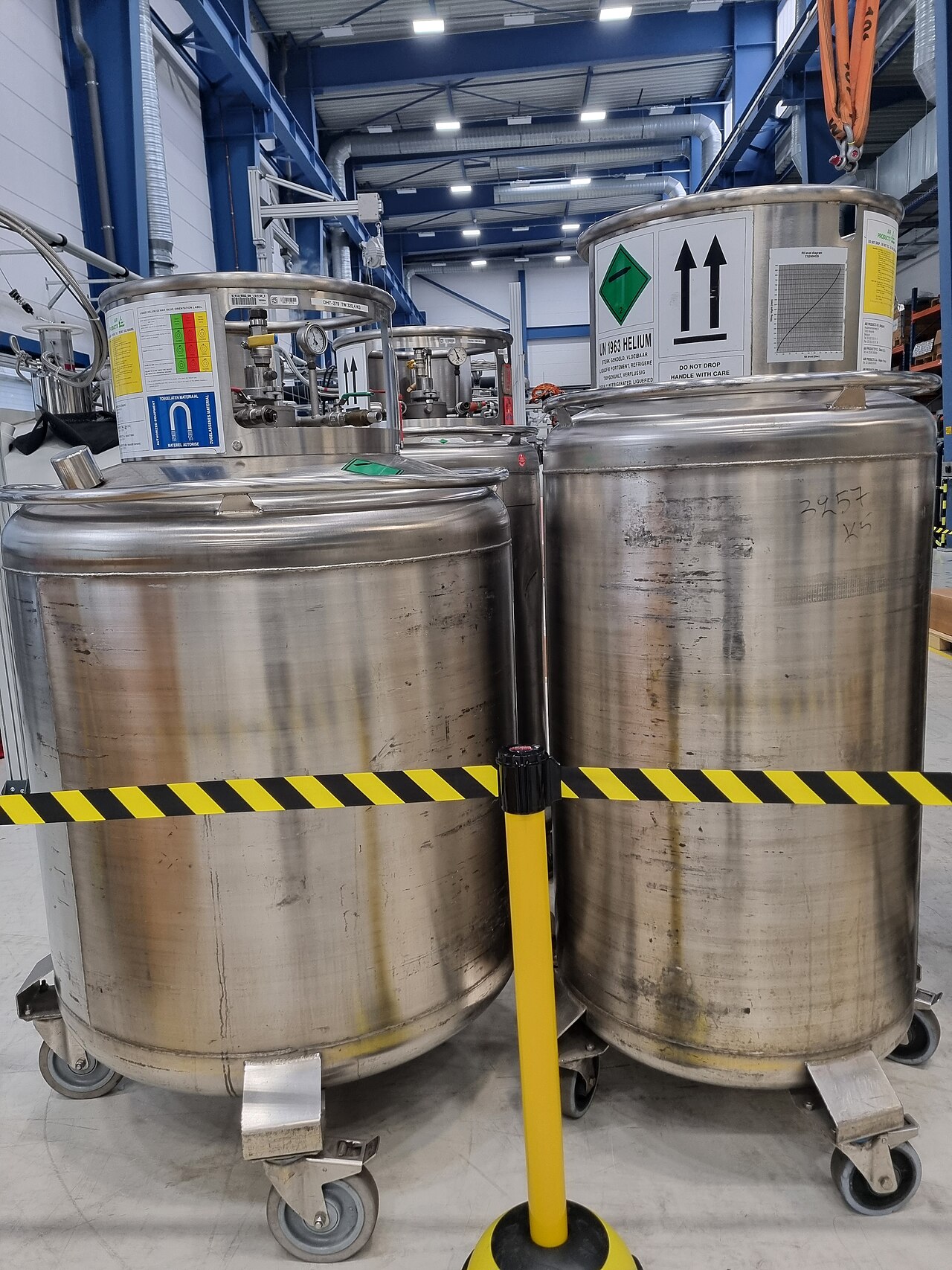
Metals with a body-centered cubic (BCC) crystal structure, built from high-melting elements like niobium and tantalum, have long been pitched as the next step past nickel superalloys for turbine blades and rocket hardware. The catch is that most of them crack easily, some even at 1,000°C. On Nov. 10, a team led by Lawrence Berkeley National Laboratory reported in Nature two BCC alloys that stay tough from 20 kelvin (-423°F), the temperature of liquid helium, all the way up to 1,300°C.
The numbers are large. Co-first author David Cook says the toughest existing BCC materials, such as steel, reach only 10 to 20 MPa√m of fracture toughness at liquid-helium temperatures, while the new alloys reach 100 MPa√m at 20 K and more than 250 MPa√m at room temperature. One is a medium-high-entropy alloy, Nb45Ta25Ti15Hf15; the other is a simple binary, Nb70Ti30. Samples were cast and rolled at UC Irvine and an Air Force materials lab, tested down to 77 K at Berkeley Lab, and tested at 20 K on the Engin-X instrument at the UK’s ISIS Neutron and Muon Source.
Lead author Robert Ritchie is candid about the limits: the alloys “aren’t the strongest in the world,” and the team does not yet know how oxidation will affect them in service. Electron microscopy at the Molecular Foundry points to an unusual sequence of competing deformation mechanisms that is not yet fully understood. Still, the result removes the main objection to this alloy family, the ductile-to-brittle transition, across the whole range a launch vehicle or cryogenic energy system might see.
Production news this week was also about hard-to-process metals. Powder maker TANIOBIS printed the niobium alloys C-103 and FS-85 by laser powder bed fusion, moving parameters from a single-laser AM400 to a four-laser AM500Q with only minor changes. Parts reached porosity below 0.1%, and demonstrator rocket nozzles came off the plate without cracks. FS-85 hit about 750 MPa tensile strength against 565 MPa for C-103, while C-103 stretched 20–22% before breaking versus 6–7% for FS-85. Separately, Soochow University and A*STAR researchers reached about 600 MPa yield in printed AA7075 aluminum by pairing a 532 nm green laser with TiC-reinforced powder, roughly 591 MPa after T73 heat treatment against 345 MPa for the infrared-laser parts, with 77.2% less magnesium lost to evaporation. A Nature Materials paper reported a printed multi-principal-element alloy holding above 1 GPa yield and about 20% elongation from 77 to 873 K without post-treatment.
Every one of these results shows the same thing: a material’s properties are not a single number. They depend on temperature, on the process route, on the laser wavelength and heat treatment, and even on which machine and how many lasers built the part. FS-85 and C-103 trade strength against elongation, and the printed niobium was stronger but less ductile than wrought stock. A design that pulls one “yield strength” from a datasheet is quietly assuming a process and a temperature that may not match the real part.
In N23D, MAT stores material properties as curves across temperature, tied to the process route, machine, parameter set, heat treatment and powder lot that produced them. CAE studies pull the curve that matches the planned CAM route, not a generic datasheet value, and QMS records the coupon tests that back each curve. Change the laser, the heat treatment or the powder supplier, and every part and simulation that relied on the old data is flagged for review.
Sources
- New Metal Alloys Defy Expectations to Withstand Extreme Heat and Cold, Berkeley Lab News Center (Nov. 10, 2026)
- TANIOBIS Prints Crack-Free Niobium Rocket Nozzles on Four-Laser System, 3D Printing Industry
- Researchers achieve ultra-high-strength AA7075 aluminium using green-laser Additive Manufacturing, Metal Powder Technology (Nov. 3, 2026)
- Process-intrinsic cellular network for sustained strength–ductility across temperatures in a 3D-printed multi-principal-element alloy, Nature Materials (Nov. 2, 2026)
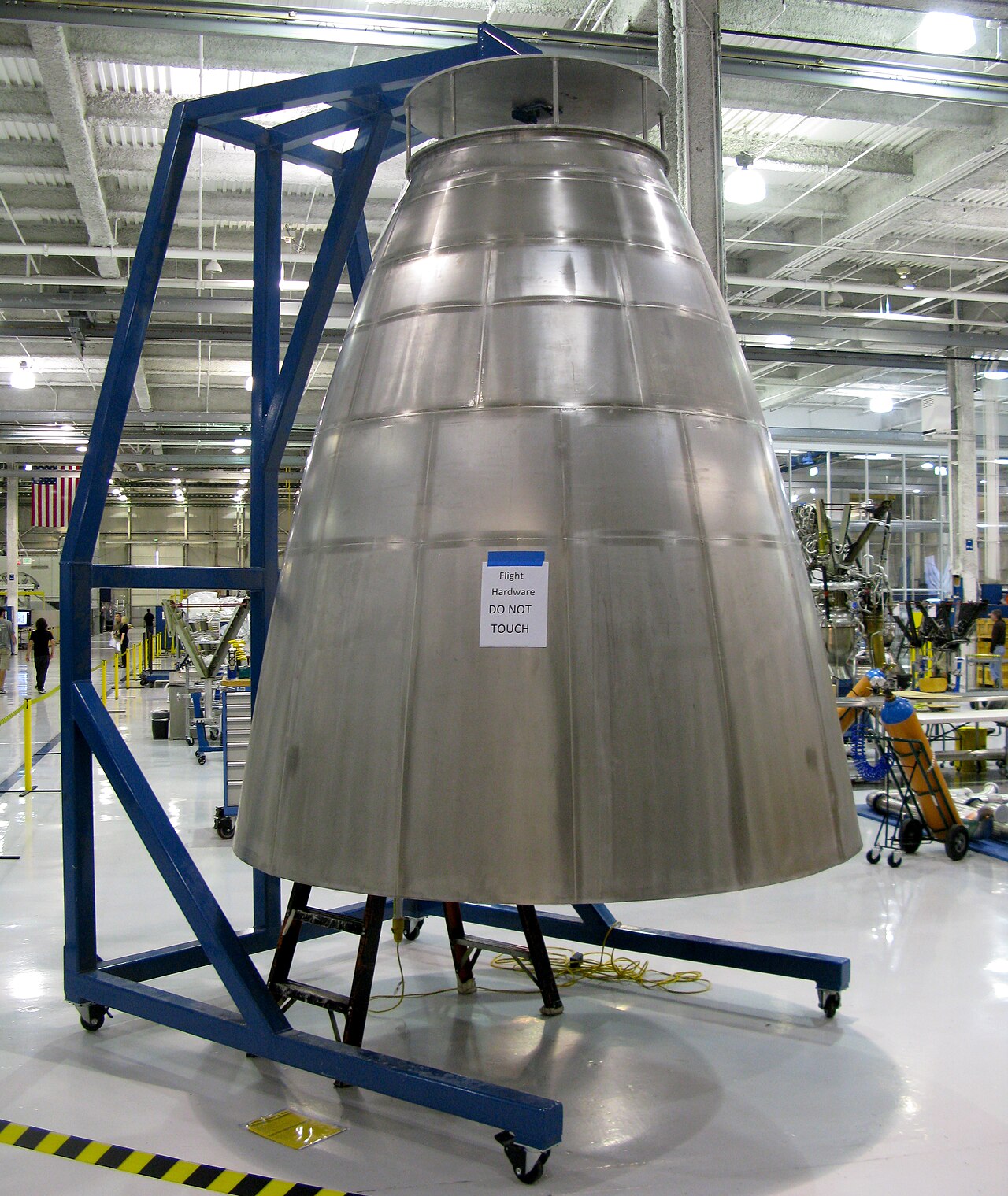
Featured photo: a niobium nozzle extension for the SpaceX Merlin vacuum engine used on the Falcon 9 second stage. Photo by Steve Jurvetson, CC BY 2.0, via Wikimedia Commons.