When a manufacturer sells a product line, the buyer gets the tooling, the inventory and the customers. The engineering history usually arrives as a data dump: a hard drive of CAD exports, a spreadsheet of BOMs, a folder of quality records and a promise to answer questions for ninety days. Everything that tied those files together stays behind in systems the buyer never licensed.
That is why carve-outs drag on for months. Someone has to work out which part numbers belong to the line, which revisions are current, which open changes and nonconformances come with it, and which suppliers and customer tickets follow. In a plant running thirteen separate systems, every one of those answers lives somewhere different.
In N23D, the company itself is modeled on the same vault as the parts. A product line is a branch of the organization in BUS, and its parts, assemblies, revisions, changes, inspection records and work history in PLM, QMS and ERP all hang off that branch. Divesting it is an approved change like any other, with full history, and the buyer receives the thread intact: one Rust binary and a vault they own outright.
One platform. Full digital thread. If selling a product line means shipping a hard drive and hoping, the thread was never there to begin with.
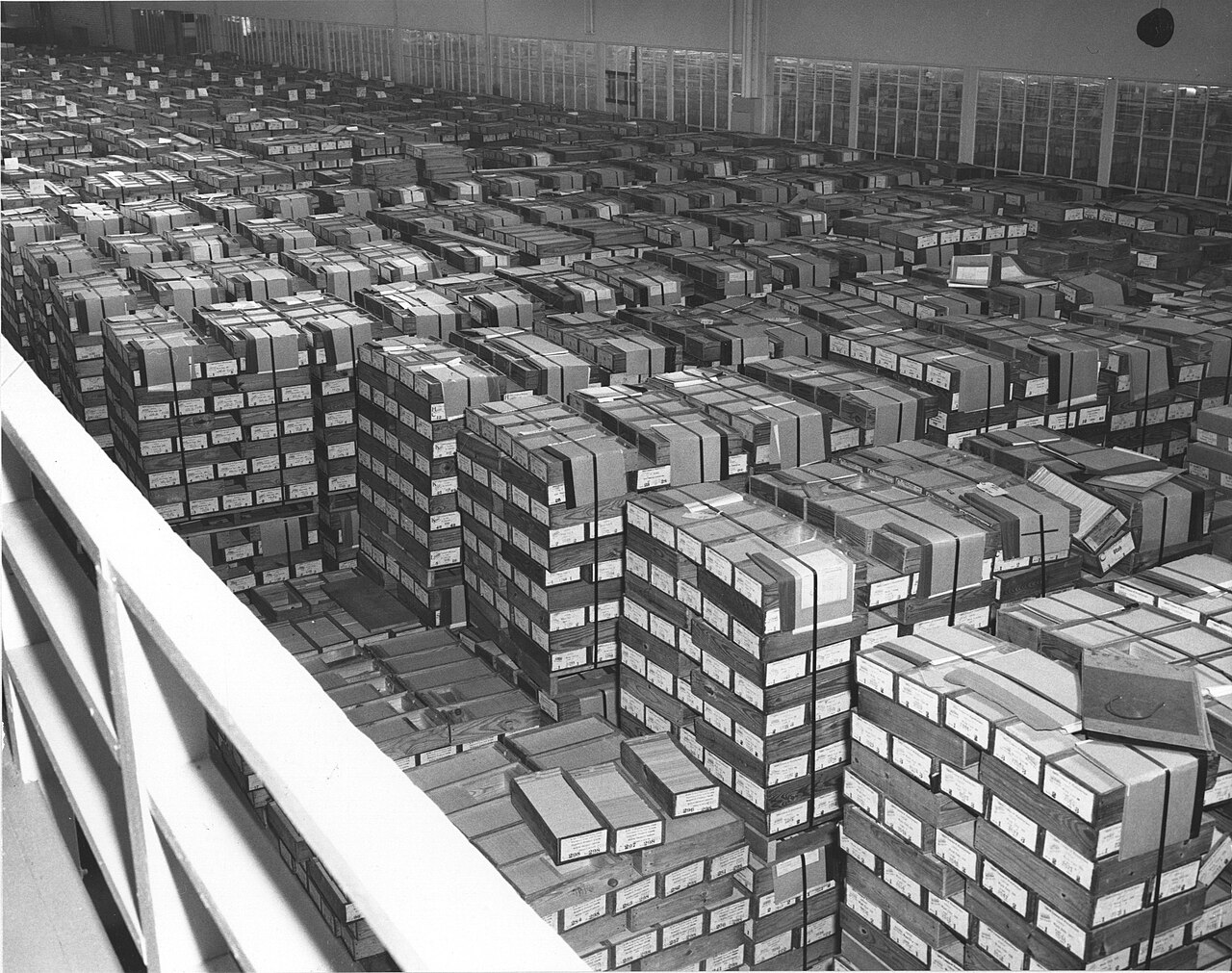
Featured photo: storage of IBM record cards at the Federal records center in Alexandria, Virginia, November 1959, U.S. National Archives, public domain, via Wikimedia Commons.