Belgian additive manufacturer Melotte saw CT-detected defects climbing on a dual-laser metal printer. By linking the CT results to build data, its team traced the problem to one of the two lasers and corrected it. Before that, the same investigation meant going from one file to another and then back to the machine to read sensor logs. Melotte serves semiconductor, aerospace and defence customers, who increasingly want proof that each part came from a controlled, repeatable process.
The change was software, not hardware. Melotte now runs amsight, an additive-specific quality backbone that connects powder, machine, process, post-processing and inspection evidence at the part level. Gathering weekly quality data into Excel used to take about three hours; it now takes about 20 minutes. Root-cause investigations that took three to four hours of searching documents now typically finish in 30 minutes or less. “The problem was never a lack of data,” says Melotte designer Thomas Vandenberghe. “It was bringing the data together in a way we could actually use.”
Pharma is attacking the same gap from the deviation side. Devia, a Visium spin-out in Zurich, came out of stealth on Nov. 11 with an AI agent that works a GxP deviation from intake to root cause, draft CAPA and inspection-ready closure. It checks each root cause against past cases to flag recurrences and watches for the same theme across sites. It sits on top of systems plants already validated, such as TrackWise, Veeva Vault QMS and MasterControl, and a qualified reviewer signs every decision. Devia says pilots halved the time users spend investigating. It also points to EN 18286, published by the European Commission in October 2026 as the first harmonised standard under the EU AI Act, which describes the quality system expected of high-risk AI providers.
Smaller shops are getting the same plumbing. On Nov. 13, Fulcrum let AI assistants connected through its MCP server search and read CAPAs by status, type, cause, linked NCR, due date or overdue, and open each one to read its problem, root cause, corrective action and tasks. On the line itself, Catalyx launched OpenLine, which connects AI and traditional machine vision, production equipment and enterprise systems so an inspection result can trigger an automated response or route a decision to an operator, with every action recorded. Catalyx says one medical device maker used it to grow output from 3 million to 50 million units a year while holding yield above 99%.
Every one of these stories starts from the same complaint: the evidence already exists, but it is scattered across spreadsheets, machine logs, CT reports and separate quality systems. Agents and connectors make that faster to search. They do not make the data agree. If the build record, the inspection and the CAPA live in different databases, someone still has to prove they describe the same part, the same revision and the same machine, and an auditor will ask.
In N23D, that link is built in, not bolted on. QMS inspections, nonconformances and CAPAs attach directly to the MES work order, the machine and the build that made the part, and to the released PLM revision it was built to. A CT defect can be filtered by laser, powder lot or operator without an export. A recurring root cause shows up across sites because every site writes to the same record. Any root cause or CAPA an assistant drafts is logged, and a named reviewer approves it, like every other change.
Sources
- Melotte reduces weekly 3D printing quality data handling from three hours to 20 minutes with amsight, Robotics & Automation News (Nov. 11, 2026)
- Devia Emerges from Stealth with an Agentic AI for GxP Pharma Quality Management, GlobeNewswire (Nov. 11, 2026)
- MCP: Search and Read Your CAPAs, Fulcrum product update (Nov. 13, 2026)
- Catalyx Launches OpenLine, Catalyx (Nov. 2, 2026)
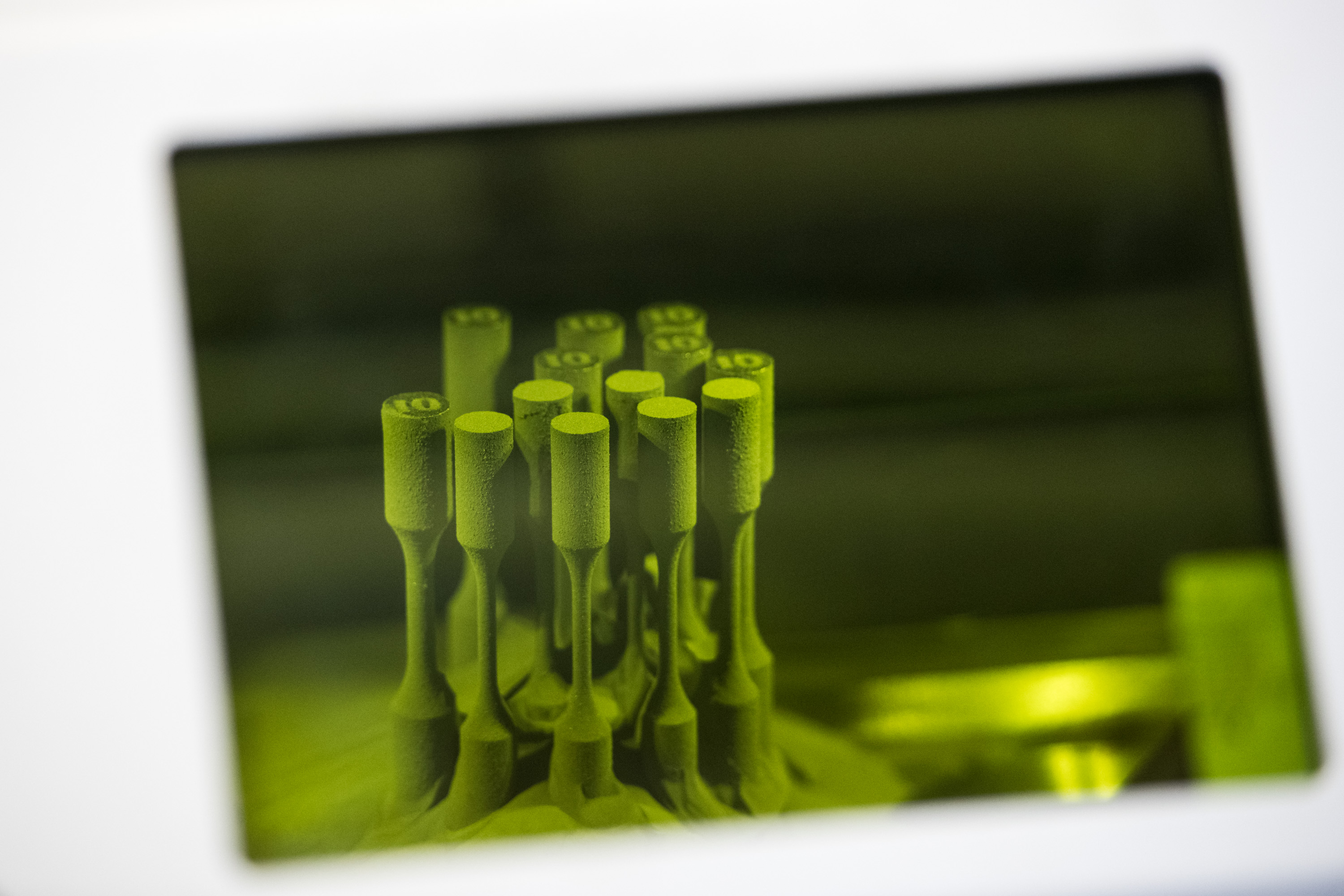
Featured photo: parts building inside the chamber of a TRUMPF TruPrint 1000 selective laser melting printer. Photo by René Volfík, CC BY-SA 4.0, via Wikimedia Commons.