

Martijn Dullaart’s July 2026 CM2 essay (with IpX) names the Change Implementation Board that runs two hours and still cannot decide. Half the room debates whether Variant B is in scope at all. The other half pushes a serial-number cut-in before the Q3 ramp. Both concerns are real — and collapsing them into one agenda item is why neither closes.
The fix is sequence, not facilitation. Applicability asks which configurations a change belongs to — a structural filter on the 150% BOM. Effectivity asks when the new part cuts into production — a date, lot, or serial commitment executed in ERP. EIA-649C packs both ideas into one word; multi-variant shops pay for that blend every week. Applicability is the precondition: you cannot set a honest cut-in until scope is closed.

Dullaart’s phantom-configuration case shows the failure mode. An improved thermal part is meant for the high-end model only. The board sets effectivity at serial 1850 before documenting that limit. Production starts; every unit after 1850 gets the part. The record looks consistent and the audit checks that effectivity was set — not that scope was ever validated. Margin erodes; sometimes a heavier part needs a bracket that only exists on the high-end build, and field failures follow.
CM2 separates the jobs. Enterprise Change Assessment resolves which products and variants the change applies to. The Change Review Board confirms applicability and approves. The Change Implementation Board inherits that closed scope and plans cut-in against inventory, interchangeability, and logistics. For space programs, ISO 21886:2026 (published Sept. 2, 2026) now requires a configuration control board with decision-making authority and classifies major vs minor changes — the same demand for a board that can actually decide.
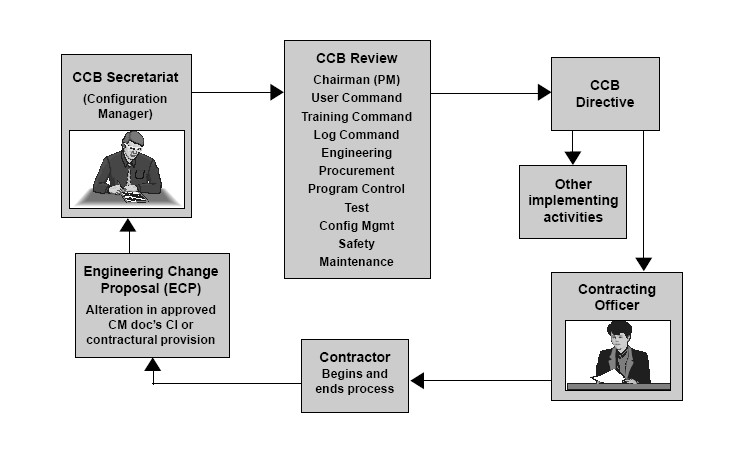

PLM vendors still sell strong effectivity tooling — date, unit, and milestone cut-in on the BOM — while applicability often stays implicit in variant rules or tribal knowledge. When a single board is asked to approve scope and lock cut-in in one sitting, engineering cannot close “whether” while manufacturing pushes “when.” Conditional decisions pile up; the effectivity that eventually ships rides an unconfirmed baseline.
For N23D CCB and PLM, the bar is plain: lock applicability on the vaulted BOM before anyone commits effectivity, keep the approval trail auditable, and do not let ERP cut-in invent a configuration the board never approved. One native Rust binary — change objects, role-gated transitions, and configuration status accounting you own — so the next board starts with “whether” already answered.
Sources
- Whether Before When / Applicability Before Effectivity, Martijn Dullaart / MDUX (July 7, 2026)
- ISO 21886:2026 — Space systems — Configuration management (published Sept. 2, 2026)
- IpX — Institute for Process Excellence (CM2)
- N23D — CCB stack page
Featured photo: Twin Control Rooms at NASA Marshall supporting Artemis science and mission safety, NASA / public domain, via Wikimedia Commons.
.jpg)