
Maintenance technicians spend only 25 to 35% of their working hours actually working on equipment, according to figures from Advanced Technology Services quoted by Munich software maker remberg. The rest goes to hunting for parts and information, planning, walking between jobs and filling in forms. On Oct. 13 remberg launched AI agents inside its maintenance software aimed at that paperwork, and based on early tests with customers and partners it estimates that up to 70% of the administrative work could be automated.
The agents cover three jobs. Anyone who spots a fault can scan the machine’s QR code and describe the problem by voice, in their own language, or with a photo; an agent first suggests a fix from the asset’s history and the manufacturer’s manuals, with source references, and if the report still goes in, it drafts a work order with the asset, priority and order type. A planning agent turns an uploaded operating manual into a maintenance plan with intervals and schedules the work against technicians’ qualifications and availability. After the job, a technician dictates what was done and the agent fills in tasks, time and spare parts used. Every draft waits for a person to approve it, and remberg says no work begins without that approval.

Other vendors are attacking the same gap from the sensor side. On Oct. 8 TwinThread released Anomaly Action Center, which sends operators and technicians a one-sentence summary of each equipment or process anomaly, ranked by how long it has lasted and how far it has drifted from its limits, and records how people respond so the response can become a procedure or an automatic rule. It connects directly to the plant’s maintenance and quality systems; in one deployment TwinThread consolidated 80 models, some watching as many as 1,500 sensors. On Oct. 20 SSI SCHAEFER introduced WAMAS Maintenance Center, a maintenance system for automated warehouses that puts asset structures, planning, work orders, spare parts and a mobile app for technicians in one product, sold in three tiers that build toward predictive maintenance.
The biggest ticketing vendor reported today. ServiceNow’s third-quarter results showed subscription revenue of $3.988 billion, up 21%, and the company raised its 2026 target for new AI contract value to $1.7 billion, from $1 billion at the start of the year. It said HPE picked it for customer support and field service in its Cloud and AI business, that managed service provider Thrive now resolves 73% of issues at first contact, and that it launched Flow, a lightweight AI service desk that runs in chat channels outside the main platform. Its manufacturing release from April added a Parts Management AI Agent that checks the parts a field technician used, removed or left unused against the work order when the job closes.

The common thread is that the machine writes the first draft of the ticket and a person signs it. That only works if the draft is checkable: the source documents the agent used, the asset it picked, the parts it logged and who approved it all need to sit on the record. It also leaves a split that none of these launches closes. remberg says its customers keep the ERP as the system of record for finance, ServiceNow and TwinThread connect to maintenance systems rather than replace them, and the fault, the work order, the parts cost and the quality record still live in different tools.
N23D is being built in Rust so a TIX ticket opens against the same asset record that MES runs and ERP costs, with no copying between systems. A ticket, plan or job record an AI agent drafts is stored as machine-made, shows the documents it was based on, and is not released until a named person approves it, so wrench time and paperwork time can both be measured from one record.
Sources
- remberg launches AI agents that cut administrative work in maintenance by up to 70%, remberg (Oct. 13, 2026)
- TwinThread Launches Anomaly Action Center, TwinThread (Oct. 8, 2026)
- WAMAS Maintenance Center (WMC): SSI SCHAEFER Simplifies the Transition to Data-Driven Maintenance, SSI SCHAEFER (Oct. 20, 2026)
- ServiceNow Reports Third Quarter 2026 Financial Results, ServiceNow (Oct. 28, 2026)
- ServiceNow puts AI to work across the manufacturing value chain, ServiceNow (Apr. 20, 2026)
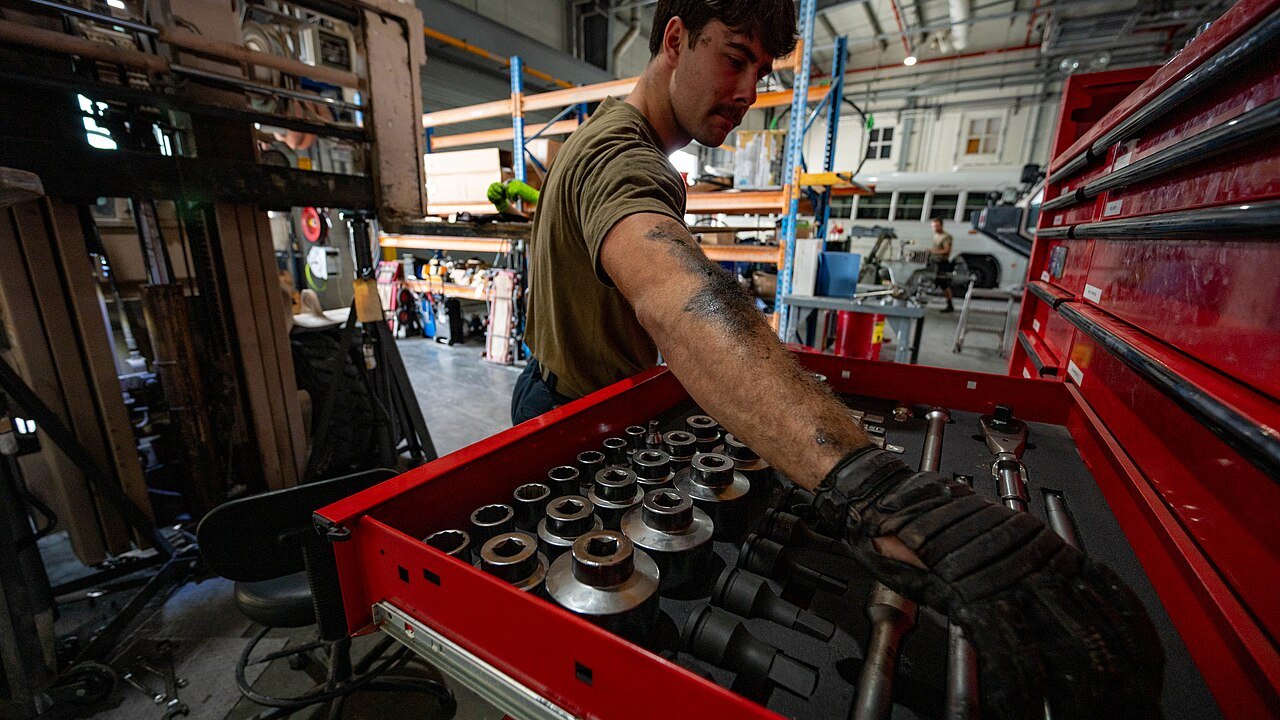
Featured photo: A material handling equipment mechanic works from his toolbox during forklift maintenance, 379th Expeditionary Logistics Readiness Squadron. U.S. Air Force photo by Airman 1st Class Robert Nichols, public domain, via Wikimedia Commons.
