QAD | Redzone has announced Manufacturing Intelligence, an AI decision layer meant to sit above ERP, MES, and frontline tools and decide what should happen when a plan breaks. The company unveiled it at its Champions of Manufacturing event in Chicago and expects it on the market in spring 2027. The pitch is blunt: manufacturers do not need more AI for its own sake. They need better outcomes when a supplier is late, a line goes down, or inventory will not cover the next order.
President of Manufacturing ERP Amit Sharma draws three layers. Champion Assist answers planner questions, such as which orders a three-day late part will hit. Persona Champions draft supplier replies or revised sequences. Manufacturing Intelligence looks across customer priorities, inventory, capacity, contracts, and cost, then weighs whether to expedite material, reallocate stock, change the production sequence, or accept a delay. “Assist helps you understand. Champions help you do the work. Manufacturing Intelligence helps the business decide what should happen next,” Sharma said.

QAD is not assuming every plant runs only QAD software. Sharma describes a shop with SAP for finance and orders, a third-party MES on the floor, and QAD elsewhere: when a machine stops, Manufacturing Intelligence should read the MES signal, map affected orders and materials, and push the decision back into the systems people already use. Frontline AI already runs in more than 2,000 plants, with seven new Redzone agents for roles such as Line Lead, Inspector, and Kaizen, and the company says the layer draws operating data from more than 6,000 plants. A planned NVIDIA partnership would feed a “federated intelligence layer” across that mix.
QAD’s companion essay frames the same shift as replacing the human as the integration layer. McKinsey’s The state of AI in 2026 found nearly nine in ten organizations use AI regularly, yet only 37% report any EBIT impact. Gartner has warned that more than 40% of agentic AI projects may be cancelled by the end of 2027 over cost, unclear value, and weak risk controls. QAD wants to measure dollars avoided, orders protected, on-time-in-full, inventory impact, and planner time saved, not whether an agent finished a task.

For N23D BUS, the useful pattern is flowchart-as-business: states, transitions, role-gated decisions, and automation that fire before, in, and after a state — with authority bounds the agent cannot cross. A decision layer that can propose a sequence change but must escalate irreversible or safety-critical moves is the same design a ERP and MES stack needs when agents start writing actions back into the plant. Watch spring 2027 for whether Manufacturing Intelligence ships with those guardrails intact.
Sources
- QAD Says Manufacturing AI Must Earn Its Place, Manufacturing Digital (Oct. 6, 2026)
- Driving Future-Ready Manufacturing: From ERP to AI-Driven Decisioning, QAD Blog (Oct. 6, 2026)
- QAD | Redzone
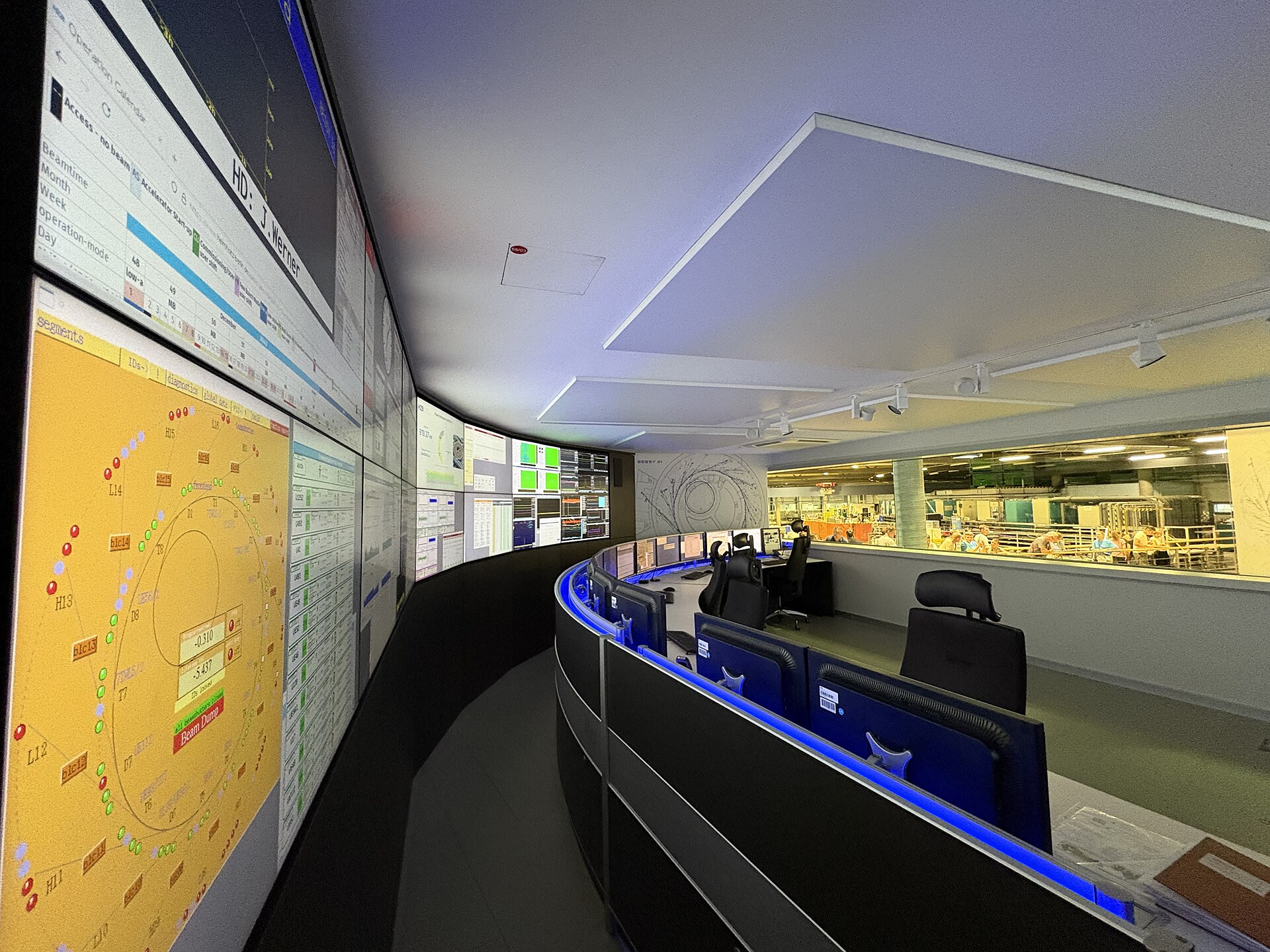
Featured photo: Control room of BESSY II by Martin Kraft, CC0, via Wikimedia Commons.
