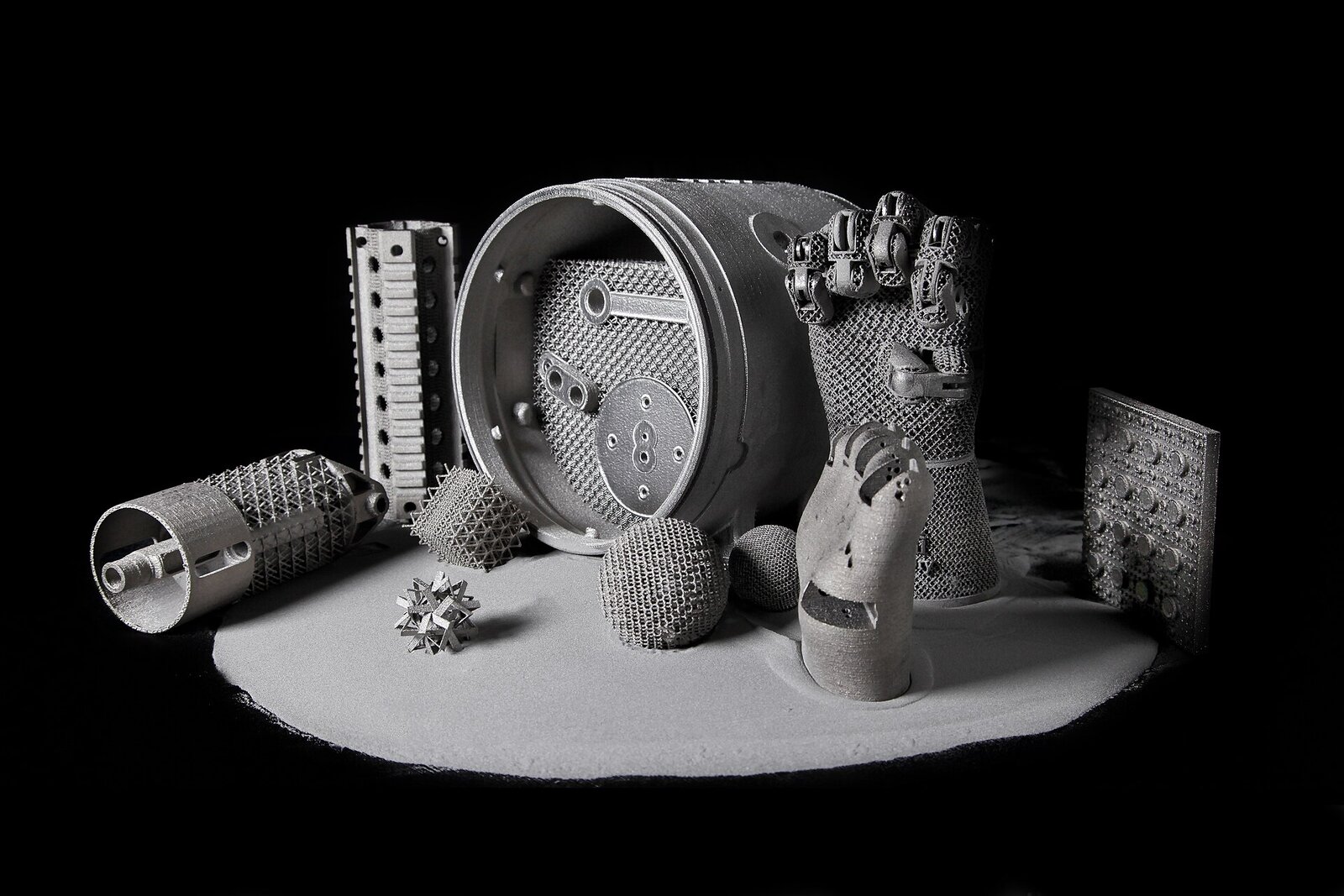
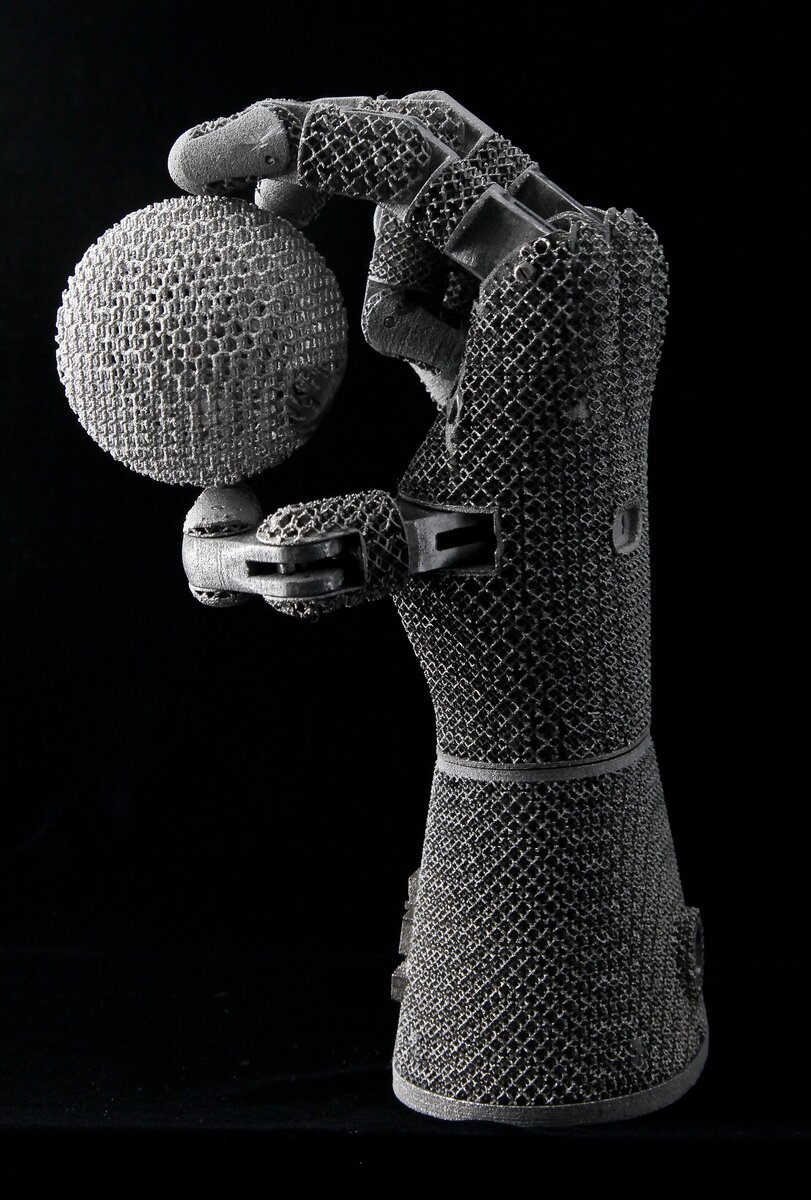
Published today in Nature Materials (Sept. 25, 2026), a City University of Hong Kong–Tianjin University team reports an ultrastrong titanium alloy made by laser powder bed fusion (LPBF)—not after fancy thermo-mechanical work, but as-built. Using high-throughput experiments plus machine learning to co-optimize composition and laser parameters, they landed on Ti–7.5Al–3.3Cr (wt%) with a microstructure of sub-10-nm hetero-stacking bands inside nanomartensitic α′ laths. The payoff: yield strength of about 1.5 GPa, ultimate tensile strength above 1.7 GPa, uniform elongation near 7.5%, and specific strength around 380 MPa·cm³/g.
That combination matters for structural materials because nanostructuring usually fights geometry. Sputtering, electrodeposition, and severe plastic deformation can make spectacular lab coupons, but they struggle with complex bulk parts. LPBF’s extreme thermal gradients and rapid cooling open a wider composition–process window; here the team blended elemental Ti, Al, and Cr powders in situ on an EOS M100 and screened 118 alloys across Al/Cr contents, laser power, and scan speed.
An XGBoost model trained on that library then ranked tens of thousands of virtual alloy–process combinations before experimental validation of the top predictions. The headline microstructure is unusual even among AM titaniums: STEM shows parallel hetero-stacking nano-bands thinner than 10 nm—AB, BC, and CA stacking variants frozen by martensitic transformation under LPBF cooling—fully developed through the as-built part. Those bands pin and multiply dislocations, delivering both high strength and work hardening that Ti–6Al–4V and CP-Ti printed under the same conditions do not match.
Sister compositions (higher Cr) trade some strength for more ductility via metastable-β TRIP behavior, and the flagship alloy still holds UTS above 1.1 GPa at 550 °C. Compared with yesterday’s shop-floor story of parameter hunting for known powders, this is alloy discovery for the printer. Cr’s SHAP dominance under LPBF conditions sits outside many wrought Ti families historically blocked by segregation; AM removes that constraint. The industrial ask is familiar: can you reproduce the stacking-band architecture on production-scale machines, qualify anisotropic builds, and put the recipe into a controlled CAM/CAD parameter set rather than a one-off lab coupon?
For N23D, the lesson is provenance of both chemistry and process. A 1.7 GPa as-built titanium is only useful if the composition, laser recipe, and microstructure evidence travel with the part—not as a SaaS black box. Shops that chase Nature-grade alloys still need vaulted build recipes and materials pedigree that survive when a cloud seat or powder lot changes.
N23D ships as one native Rust binary: local-first CAD with vaulted MAT and build history so discoveries stay owned when you scale from coupon to flight hardware—geometry, chemistry, and process locked together under your control.
Sources/References
- Nature Materials — Sub-10-nm stacking bands enable ultrastrong additively manufactured titanium (Bai, Hua, Luan et al.; published Sept. 25, 2026)
- N23D — MAT stack page
- N23D — CAM stack page
- N23D — CAD stack page