Open a CAD model that came in from a supplier and check its mass properties. Odds are the body is still wearing a default material nobody changed, and the weight on the drawing, the BOM, the freight quote, and the stress plot all trace back to a placeholder no engineer ever chose. Nothing flagged it, because the software filled the blank with a guess.
N23D refuses to guess. Materials come only from MAT, the materials module. CAD picks a material variant; it does not own density, stiffness, or friction. If the variant has no density, the part’s mass is reported as unknown, not as a plausible-looking number. Empty is not zero, and simulation does not invent a modulus to make the color plot close.
The same variant is what CAM cuts, CAE solves, and ERP buys, on one native Rust binary: one id, several consumers, zero second copies. A coupon test or a mill cert becomes a new variant with its source and validity window attached, and you select it. See how it works in MAT, then follow the same record through CAD, CAE, CAM, and ERP.
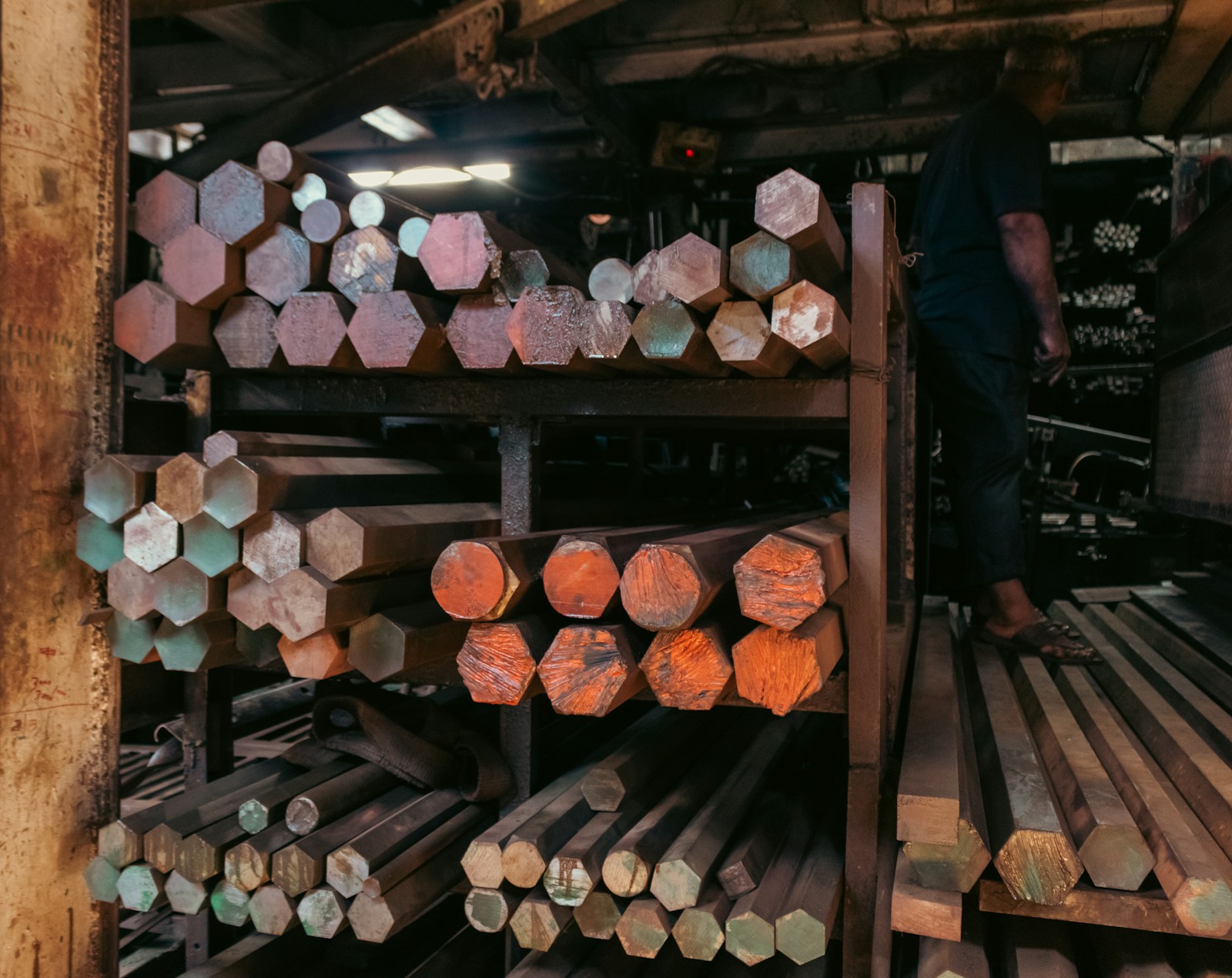
One platform. Full digital thread. The shop paints bar ends so nobody saws the wrong grade. Your engineering software should be at least that honest about what a part is made of.
Photo: Zoshua Colah / Unsplash