A 3D breakdown simulation of a power semiconductor that took Infineon 24 days now finishes in less than 48 hours. Synopsys reported the result on Oct. 21 at NVIDIA GTC Berlin: Infineon ran Synopsys Sentaurus Device on four NVIDIA H200 GPUs and measured a 12x speedup. Most of the gain comes from one step. Engineering solvers spend much of their run time solving large sparse systems of equations, a math-heavy step that repeats throughout a simulation and limits how many designs a team can test.
NVIDIA moved that step to GPUs with cuDSS, a sparse direct solver library that became generally available the same day. The vendors already using it reported their own numbers. Dassault Systèmes says it sees 8 to 10x speedups with cuDSS inside its Abaqus structural solver and its CST electromagnetic solvers. ZEISS SMT ran an EUV lithography plasma benchmark in COMSOL Multiphysics 4x faster, and the full simulation still took six days and 14 hours. Siemens uses cuDSS in Simcenter STAR-CCM+ for the structural side of fluid-structure interaction, Cadence uses it in its Celsius thermal and warpage solver, and Applied Materials reports up to 10x in its Ginestra device simulator. The library has C, C++, Python and Fortran interfaces and scales from a workstation to a cluster.

Synopsys listed other customer results from the conference. A FORVIA HELLA exterior lighting simulation in Ansys Speos, run in T-Systems’ Industrial AI Cloud, dropped from more than 4.5 hours to under 19 minutes, a 14.4x speedup on 32 NVIDIA RTX PRO 6000 GPUs against a 256-core CPU setup. Photonics startup iPronics ran Ansys Lumerical FDTD on H100 GPUs on AWS up to 13x faster than on 96 CPU cores, cutting a 20-point edge-coupler sweep from about nine days to 18 hours. Imec benchmarked GPU-accelerated S-Litho lithography simulation at up to 40x. Synopsys also said it joined NVIDIA’s Halos safety ecosystem, linking Ansys AVxcelerate sensor simulation and Ansys medini safety analysis into one traceable safety case.
The other approach skips the solver for most design candidates. On Oct. 27 Luminary published SHIFT-NVH, a neural network trained on finite element runs of one car body, the 2010 Toyota Yaris body-in-white from the public NCAC crash model. Given the sheet gauges of 15 parts, the material and the vehicle speed, it predicts road-induced vibration at all 130,713 surface nodes. On 192 held-out cases the median field error was 1.1%, and it picked the correct direction of change for 99.5% of parts that moved by 5% or more. It was trained on four H100 GPUs and only covers that one mesh, ±30% gauge, steel, aluminium and magnesium, and 30 to 110 km/h; Luminary says full FE and physical testing remain the basis for final gauge decisions. PhysicsX and the British America’s Cup team GB1 reported a similar setup for hull design, with 5x fewer high-fidelity RANS runs and 100x faster evaluation overall.
The result is that the number of simulation runs a team can afford is going up fast, through both faster solvers and trained surrogates. That makes the bookkeeping harder, not easier. A 12x faster solve is only useful if the team can still say which mesh, which material data and which solver version produced the answer that went into a design decision. A surrogate like SHIFT-NVH is only valid inside the range it was trained on, so that range needs to sit next to every prediction it makes, along with the FE runs it was trained from. None of these announcements addresses where those records live; in most companies they are spread across solver files, scripts and slide decks.
N23D is building its CAE module in Rust with the solver, mesher and linear algebra written in-house. The first release targets linear static, modal and steady thermal studies of 200,000 to 500,000 degrees of freedom on a workstation, with parallel assembly on one machine; GPU sparse solves are not in that first release. Every study stores its solver version, element type and mesh hash and evaluates a pinned snapshot from MAT, so a result can be replayed and traced to the exact material data. A passed study is evidence attached to the part in PLM, not a release.
Sources
- Advancing Physical AI with AI Physics and Accelerated Computing, Ansys, part of Synopsys (Oct. 21, 2026)
- Synopsys at NVIDIA GTC Berlin: Delivering Engineering Precision with Speed, Synopsys (Oct. 21, 2026)
- NVIDIA cuDSS Now Generally Available to Accelerate Engineering and Scientific Simulations, NVIDIA (Oct. 21, 2026)
- Introducing SHIFT-NVH: A Large Physics Model for Body Vibration and Gauge Design, Luminary (Oct. 27, 2026)
- PhysicsX and GB1 Unveil New AI-Powered Approach to America’s Cup Yacht Design at NVIDIA GTC Berlin, PhysicsX (Oct. 21, 2026)
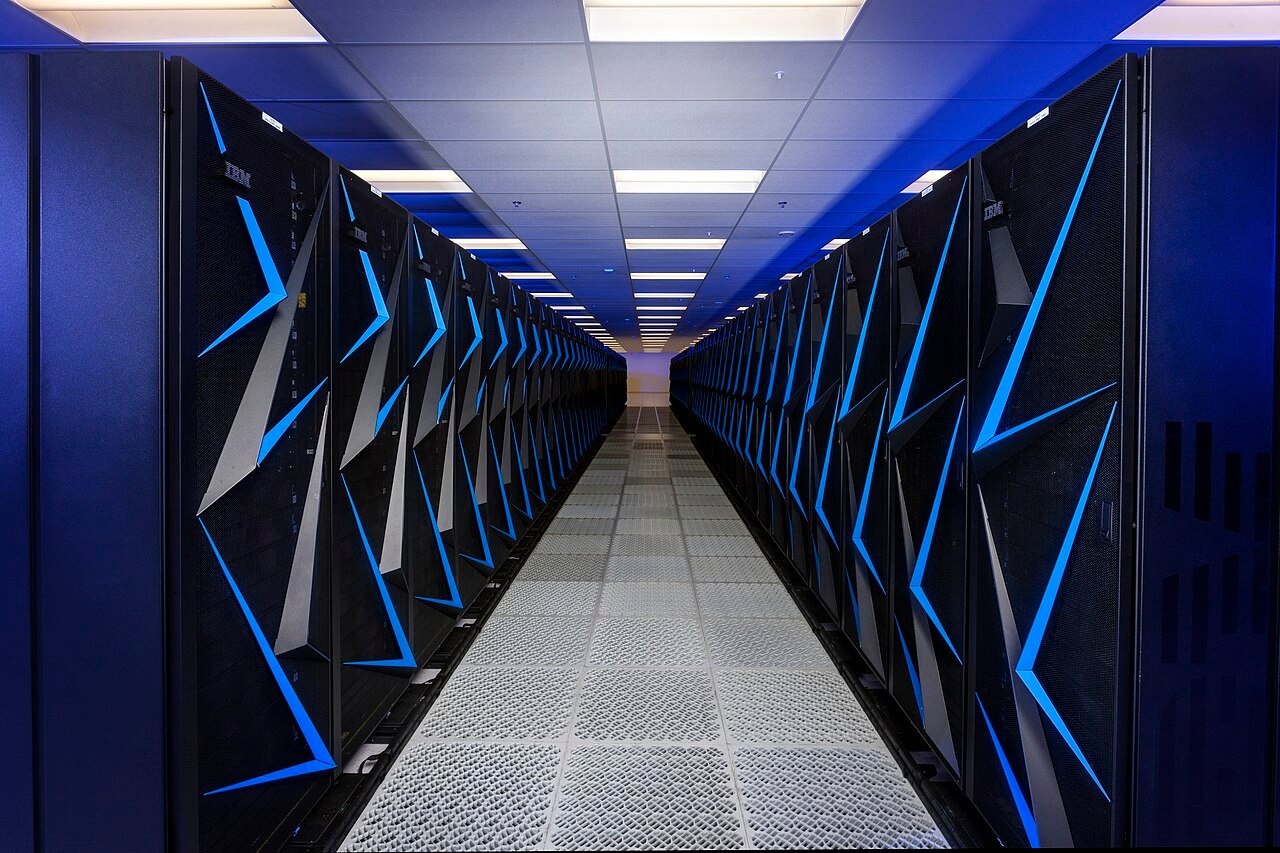
Featured photo: The Sierra supercomputer at Lawrence Livermore National Laboratory. U.S. Department of Energy photo, public domain, via Wikimedia Commons.
