

Washington State University just did something production metal AM teams feel in their bones: they used AI to hunt a process window instead of burning months on trial-and-error. In work published in the Proceedings of the AAAI Conference on Artificial Intelligence (and covered this week by WSU News), the team’s BEAM framework found feasible Directed Energy Deposition parameters for NASA’s GRCop-42 copper–chromium–niobium alloy — including a first successful print at 500 watts.
GRCop-42 is the heat-flux workhorse for regeneratively cooled rocket chambers: high thermal conductivity, strength under extreme temperature, and a stubborn personality on infrared lasers. Copper reflects most of the beam and dumps heat so fast that a stable melt pool is hard to hold. Industry often reaches for 2–4 kW machines; more than 90 percent of commercial printers sit in the 500–1000 W band. That mismatch is why the alloy stays scarce outside specialized shops.
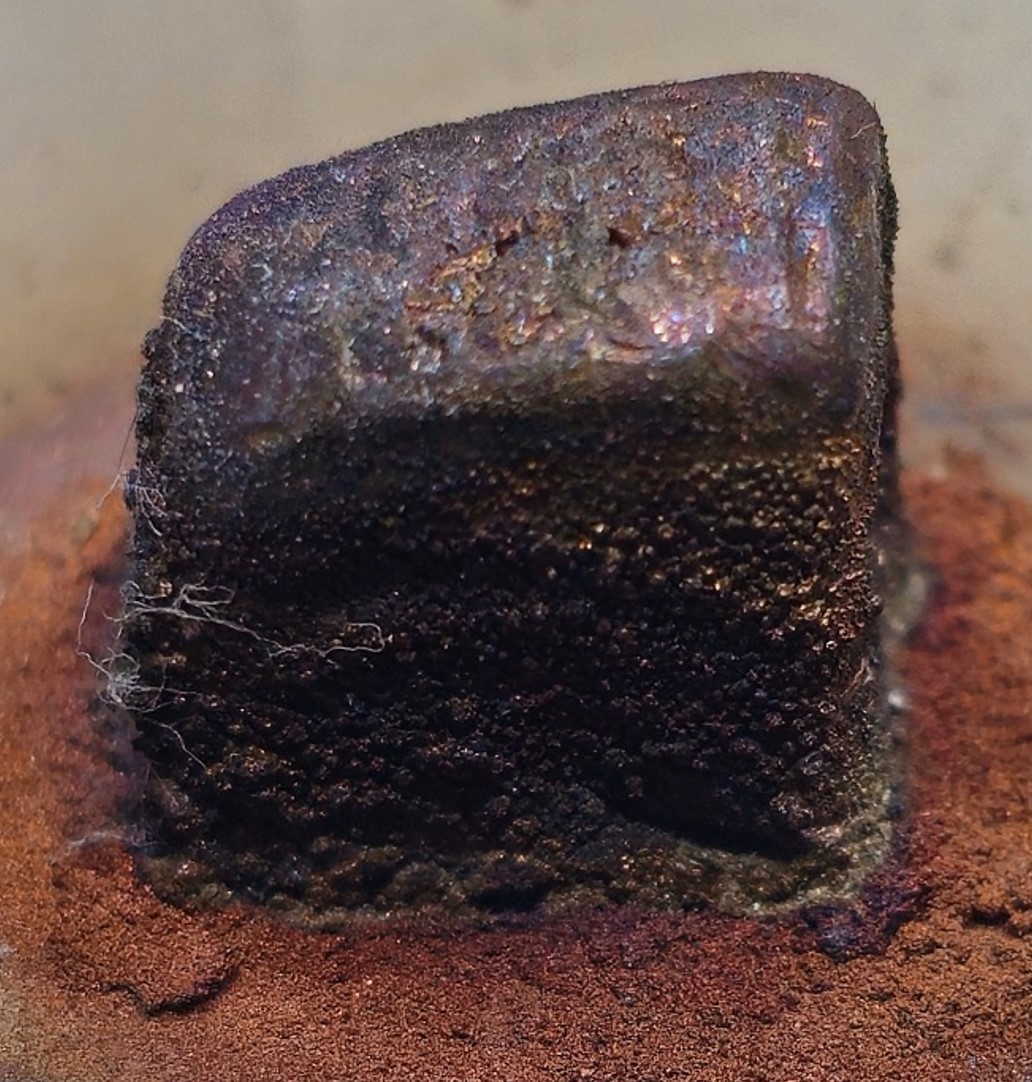
The search space is brutal: on the order of 100 million parameter combinations per laser-power level (feed rate, gas flow, scan speed, layer height, and related knobs). Manual campaigns had already logged 37 failed configurations. BEAM treats feasibility as a rare positive class, builds a probabilistic surrogate from past runs, and picks small batches that balance “looks promising” against “we still do not understand this region.” Failures still teach the model.
Within three months and a 40-experiment budget, the team reported six successful configurations across 950 W, 700 W, 600 W, and 500 W — at least one hit inside a budget of ten trials at each power. That is the first documented GRCop-42 success at 500 W on readily available infrared DED platforms in their deployment. Lower power means less energy, less optics wear, and a path for universities and smaller labs that do not own multi-kilowatt cells.
Meanwhile the binder-jetting side of production AM is consolidating hard. Since 13 August 2026, ExOne GmbH and voxeljet GmbH operate as one company under ExOne Global Holdings in Gersthofen, folding more than thirty years of sand and industrial binder-jet know-how for foundries, automotive, and aerospace casting. Process windows and vendor portfolios are both compressing toward fewer, more production-ready stacks.
The N23D read is simple. A printable alloy without a captured, versioned process window is still tribal knowledge. Parameters, success/fail labels, and microstructure outcomes belong on the same digital thread as the CAD and the BOM — not in a lab notebook next to the DED cell. AI that finds the window is useful. Software that owns the window across change, qualification, and the shop floor is the real production system.
Sources / References
- WSU News — Researchers use AI to democratize 3D printing of crucial metal alloy (24 Aug 2026)
- AAAI — Discovery of Feasible 3D Printing Configurations for Metal Alloys via AI-Driven Adaptive Experimental Design (DOI: 10.1609/aaai.v40i47.41428)
- arXiv — Fadhel et al., BEAM / GRCop-42 DED adaptive experimental design (2601.17587)
- ScienceDaily — AI searched 100 million possibilities for NASA rocket alloy printing (27 Aug 2026)
- Phys.org — AI finds six ways to print rocket-grade alloy on commercial 3D printers
- NASA NTRS — GRCop-42 development and hot-fire testing (Gradl et al.)
- 3D ADEPT — ExOne and voxeljet GmbH now operate as one company (19 Aug 2026)
- N23D — Metal AM / platform




Leave a Reply