
On 17 June 2026, Siemens published the industrial version of a sales-engineer complaint: quoting complex equipment still takes days because the configurator lives in PLM and the opportunity lives in CRM. Teamcenter Service Lifecycle RLM, listed on the Salesforce AppExchange, now embeds Teamcenter’s product configurator inside Salesforce Revenue Cloud so the same variant rules engineering authors are the ones sales consumes.
The architecture is blunt. Configuration rules, option groups, and multi-level dependencies are authored once in Teamcenter and consumed by the Revenue Cloud engine. Inside Salesforce the sales engineer picks a catalog item, hits Configure, and invalid combinations are filtered before a quote line is born. What used to be a phone call to design is now a constraint check at the point of sale.
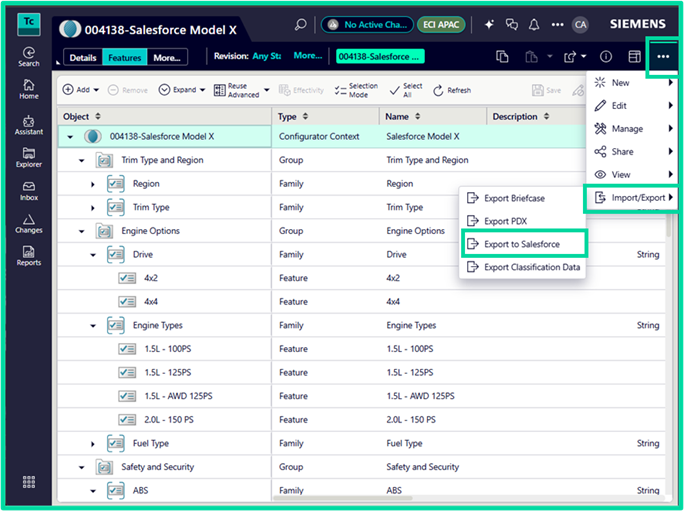
Spring 2026 (SLM 2606) tightened the loop. When a feature is discontinued in Teamcenter, Salesforce only drops it after a re-export. Failed exports roll back instead of leaving a half-written catalog. Quote lines can be flagged Incomplete or Invalid against Teamcenter as the source of truth before they go to approval. That is the difference between a pretty CPQ screen and a quote the factory can actually build.
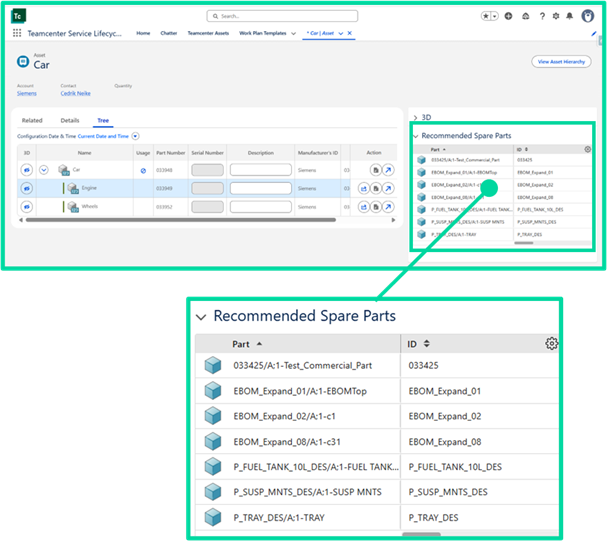
The aftermarket half is the customer digital twin CRM vendors keep promising. Teamcenter SLM already maps as-maintained structures into Salesforce assets. Spring 2026 adds Available Spare visibility from Teamcenter inside Salesforce, plus RapidAuthor 3D parts catalogs in Lightning. Siemens’ March note is explicit: asset-based quotes for upgrades, spares, and service packages, with Agentforce Revenue Management to surface attach offers.
That timing is not accidental. Salesforce CPQ, the Steelbrick managed package, is end of sale — not end of life — with new investment on Revenue Cloud Advanced inside Agentforce Revenue Management. A manufacturer still on package-object CPQ is quoting on a frozen engine while the PLM vendor is already targeting the native catalog. For a platform that treats CRM as a view on the same bill, not a nightly sync, a configurator that has to be exported into a second system is still a translator. A single platform change model beats a stack of connectors that forget why the option was legal yesterday.
None of this retires the seam. Two products, a re-export step, and a CPQ-to-RCA migration that partners describe as a refactor, not a port. Schema drift still invents phantom options, and a signed quote can still outrun the factory. The useful test over the next few quarters is practical — change a variant rule in Teamcenter and watch the next Salesforce quote refuse the combination without a call to engineering.
Sources / References
- Siemens — When your sales team can create quotes in minutes, not days (17 Jun 2026)
- Siemens — What’s New in Teamcenter SLM, Spring 2026 / SLM 2606
- Siemens — Turning CPQ into a Revenue Engine, not a Bottleneck (31 Mar 2026)
- Siemens — What’s New in Teamcenter SLM 2512 (Fall 2025)
- Salesforce AppExchange — Teamcenter Service Lifecycle for SFDC
- Siemens — Siemens and Salesforce partnership
- Salesforce — CPQ is end of sale, not end of life
- Salesforce — CPQ migration to Revenue Cloud Advanced
- Salesforce — Why a single platform is the future of revenue management
- Salesforce Help — Manage Your Quotes with Salesforce CPQ (maintenance notice)
- N23D CRM
- N23D platform




Leave a Reply