Dover, an industrial manufacturer with more than $8 billion in annual revenue, is now selling the software it uses to talk to dealers. Its CDS Visual unit launched CDS Partner Exchange on Oct. 29, a portal that puts a manufacturer’s distributors, dealers and end customers in one place to see orders, quotes, alerts, warranty claims and returns. CDS Visual has built 3D product visualization, spare-parts lookup and digital work instructions for industrial manufacturers since 2005. The new product connects those to the CRM, ERP, commerce and service systems the manufacturer already runs.
The feature list covers most of the work that happens between a manufacturer and its channel. Partners get 24/7 self-service access to orders and quotes, structured RFQ workflows, guided warranty and returns submissions with live status, and an embedded store for products and parts. On the back end it pulls orders, inventory and pricing from ERP in real time, and it handles partner onboarding and access through configurable workflows. It runs as multi-tenant SaaS, either as a standalone partner portal or wired into existing ERP and e-commerce systems. Dover did not publish customer names, prices or results with the launch.

Other vendors are going after the conversations that never reach a portal. On Oct. 22 Solgari put a Manufacturing Customer Engagement app on Microsoft Marketplace. It runs voice, messaging and an AI agent called Napster AI OmniAgent through Microsoft Teams and Dynamics 365, hands calls to a person when the agent can’t answer, and saves each conversation as structured records in Microsoft Dataverse and Salesforce. Solgari pitches the result as a record of recurring product issues and customer requirements, and it lists Mimaki and Mitsubishi Electric among its manufacturing customers. Buyers can count it against existing Azure spending commitments and go live without a separate integration project, the company says.
New York startup Otto launched a voice CRM for field sales on Oct. 26. A rep calls Otto after a plant visit and talks through the meeting, and Otto updates the deal, adds contacts, drafts the follow-up email, creates tasks and quotes, and sends the manager a summary, asking the rep before it sends or changes anything. Its models are tuned to understand part numbers over road and factory noise, and it pulls pricing and past orders from ERP. A day later, Salesforce added controls to Agent Fabric, its system for governing AI agents. An Agent Kill Switch and budget caps are available now, and automatic tests that score agents in production arrive in beta in November, with general availability in January 2027.

Taken together, these launches capture more of what customers say and do: the warranty claim, the call to support, the rep’s notes from the plant floor. But each one writes that information into another system, synced to the CRM and ERP through connectors. A warranty claim is only useful to engineering if it names the serial number, the revision that shipped and the part that failed. A call transcript about a recurring leak only helps if someone can link it to the drawing and the supplier lot. When the portal, the call recorder and the CRM each hold their own copy of the customer, that link has to be rebuilt by hand.
N23D treats CRM as part of the same Rust application that holds the product record. The customer service portal is in scope for the first release, under CRM and TIX: dealers and customers see their own orders, quotes, tickets and warranty claims, and each claim points to the serial number, released revision and as-built parts behind it. Quotes and orders come from the same records ERP invoices from, and customer statements can be turned into numbered requirements with an approval step. Nothing has to be copied between a portal, a CRM and an ERP, because there is only one record.
Sources
- CDS Visual Launches New Platform Enabling Collaboration Between Industrial Manufacturers and Partners, Dover via PR Newswire (Oct. 29, 2026)
- Solgari launches Manufacturing Customer Engagement app to provide valuable customer context for service, sales and AI agents, Solgari (Oct. 22, 2026)
- Otto Launches the World’s First Voice AI CRM for Field Sales, Otto (Oct. 26, 2026)
- Salesforce Expands Agent Fabric to Automatically Stop Runaway Costs and AI Agent Failures, Salesforce (Oct. 27, 2026)
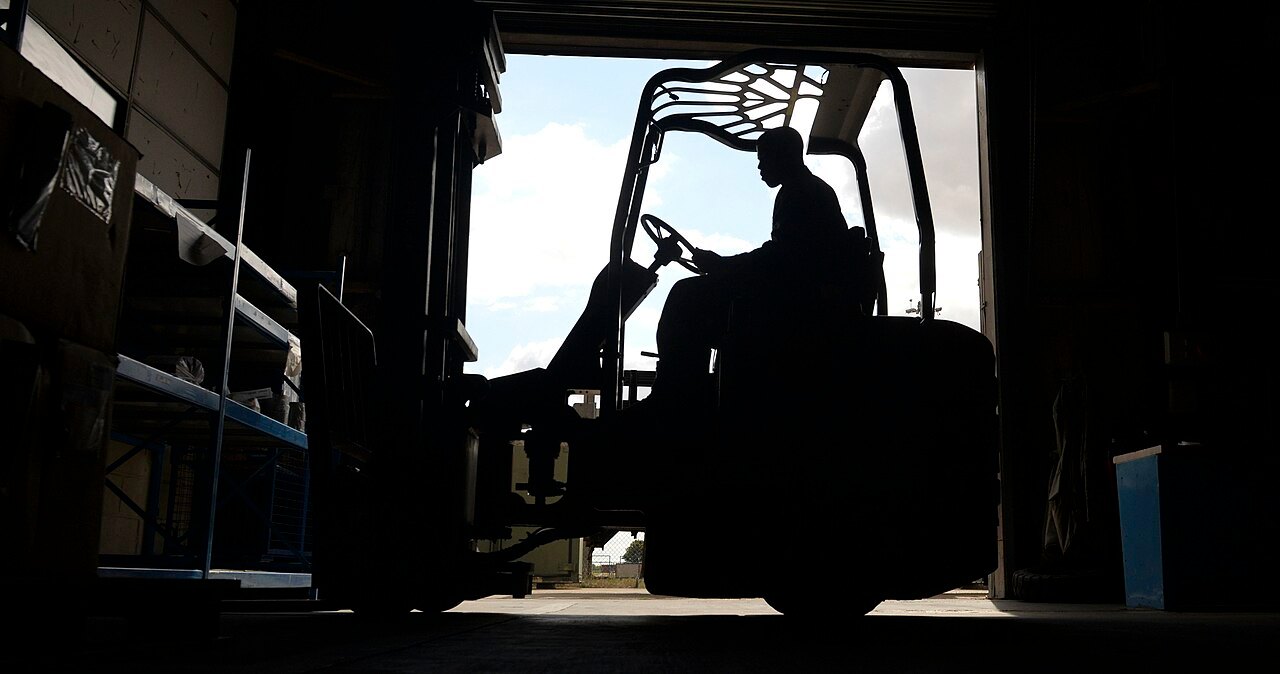
Featured photo: The aircraft parts store warehouse at RAF Mildenhall, England, during a supply delivery. U.S. Air Force photo, public domain, via Wikimedia Commons.
