Customers do not speak in tolerances. They say things like “I don’t want the lid to be in the way when I put the object in.” In most companies that sentence lands in a CRM note or a sales email, someone translates it into a spec in a Word document, and engineering designs to the spec. By the time the hinge is drawn, nobody can find what the customer actually said.
That translation is where products go wrong. Was “not in the way” 90 degrees of opening or 110? Is 90 a hard floor or a hope? When the prototype comes back at 85 degrees, sales, engineering and quality each argue from a different document, and the customer’s own words are three systems away.
N23D is being built with requirements capture inside the same platform as the design. A plain, need-based statement goes in as the customer said it. N23D asks clarifying follow-up questions and turns it into a precise requirement with a number, units and a tolerance, and it can hold two levels: a must-meet minimum, say a 90° lid opening, and a nice-to-have target of 110°. The reasoning and the original words stay attached, and the requirement goes through an approval step before engineering designs to it. It lives next to the CRM record it came from, the PLM revision that answers it, and the QMS check that proves it.
One platform. Full digital thread. When the finished assembly is checked, the pass or fail goes against the approved number and the customer’s sentence that started it, not against someone’s memory of a phone call.
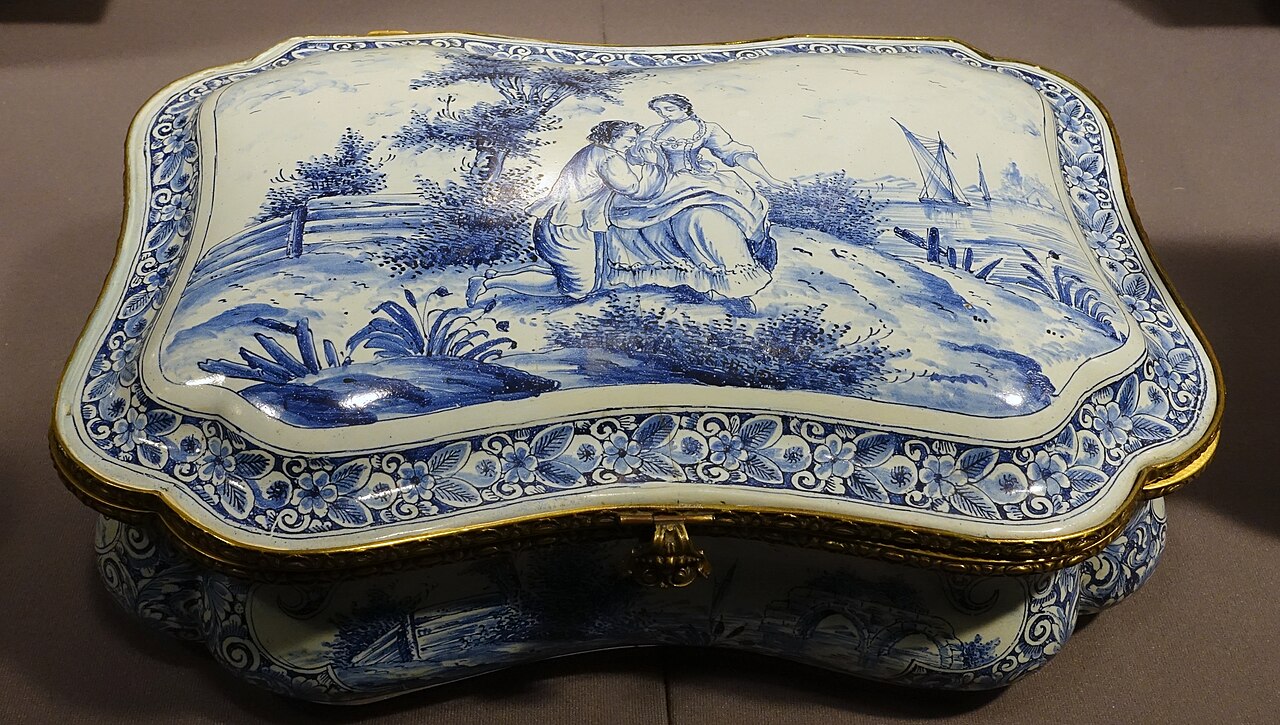
Featured photo: Box with hinged lid, Netherlands, early 1800s, ceramic, Museum of Anthropology, University of British Columbia. Daderot, public domain, via Wikimedia Commons.