
Siemens posted Parasolid v39.0 on 25 August 2026 (Silvia Peruch, PLM Components). Wikipedia lists the stable release as 31 July 2026. The kernel has been the industry geometry engine since 1986, when Shape Data shipped it; Siemens owns it now. The claim is not a new ribbon button. It is that B-reps, facets, and implicit geometry now live in the same 3D model.
Siemens still brands the B-rep-plus-facet mix as Convergent Modeling. Version 39.0 extends that mix into cellular bodies with embedded lattices, which is the collision most shops already have: a scanned mesh, a machined solid, and additive infill dumped into one file the kernel used to treat as a visualization dump. Scan-to-CAD and AM gyroid infill were never going to wait for a clean B-rep.
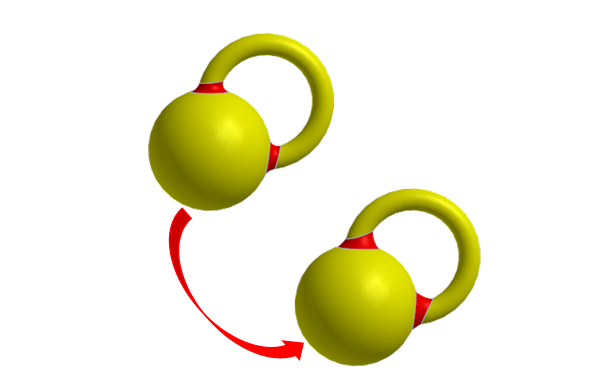
The APIs are kernel math, not NX chrome. Reblend can now change size, shape, and type. Perspective silhouettes imprint onto topology; isoclines come back as construction geometry; local edge edits can force new curves instead of reusing old ones. Mesh is no longer a display dump: Euler edits (re-triangulation, fin splitting, facet subdivision), watertight Booleans, and surface fitting from mesh vertices alone for reverse engineering.
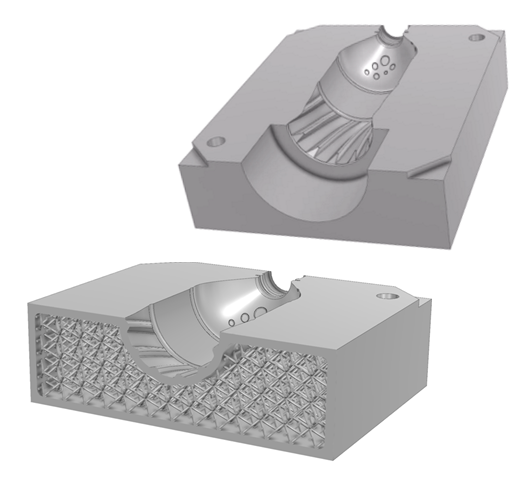
Additive is where mixed geometry stops being a demo. Clash operations now see cellular bodies with embedded lattices, not just the envelope. Mass properties can skip lattice and frame contributions when you need the number fast. Slicing emits geometrically matched polylines in overlap regions, which is the CAM and FEA handoff, not a render. Embossing, instancing, knitting, and hollowing were extended for those cellular workflows.
Siemens lists 900-plus functions, 200-plus ISVs, and 350-plus apps on the documented Parasolid XT format. NX sits on it, and so does a long licensed list, which is why a kernel change is an industry event. Spatial’s 2026 1.0 InterOp matrix (18 November 2025) still names Parasolid 38. The open-kernel parallel landed the same week: Open CASCADE 8.0.1 on 30 July 2026, with thread-safe fillets and an ~8× faster face check on a 2,000-hole benchmark (9.21 s to 1.11 s).
v39 also adds ARM and x86 iOS Catalyst, plus Python bindings. The kernel still does not carry semantic PMI. Tolerances travel in the application and in STEP AP242; ISO 10303-242:2025 (Edition 4) added assembly-level PMI, and Onshape only made native MBD a default in February 2026. That is the thread N23D treats CAD as a view on: mixed geometry is now the product of record, and a single change model still has to carry the semantics one layer up.
Sources / References
- Siemens PLM Components — Parasolid v39.0: Advancing the Future of Geometry Modeling (Silvia Peruch, 25 Aug 2026)
- Siemens — Parasolid product page (200+ ISVs, 350+ XT apps, 900+ functions, Convergent Modeling)
- Wikipedia — Parasolid (stable v39.0 / 31 July 2026)
- Tech Soft 3D — Siemens Parasolid 39.0 downloads
- Siemens PLM Components — What’s new in Parasolid v38.0 (4 Aug 2025)
- Spatial — 2026 1.0 (18 Nov 2025; InterOp still lists Parasolid 38)
- Spatial — 2026 1.0.1 (23 Apr 2026; assembly-level PMI)
- Engineering.com — Spatial enhances SDKs for CAD, meshing, and workflows
- Open CASCADE Technology 8.0.1 release notes (30 Jul 2026)
- ISO 10303-242:2025 — STEP AP242 Edition 4
- Onshape — Cloud-native MBD / PMI (Feb 2026)
- DEVELOP3D — Model-based definition goes live in Onshape (2 Mar 2026)
- N23D CAD
- N23D platform



Leave a Reply