A laser cutter will cut whatever outline it is handed, at the same speed, whether that outline is the current revision or one that was replaced last week. In most sheet metal shops the outline arrives as a DXF someone exported from CAD, flattened, renamed and dropped into a separate nesting program that has no idea which revision it came from.
That export is where the thread breaks. The nest knows the sheet size and the part count. It does not know the material the part was released in, the bend allowance engineering used to flatten it, or that a change order moved a hole on Tuesday. When the flat pattern changes, the old DXF keeps getting cut until someone finds the scrap.
In N23D, 2D laser nesting is part of CAM, and it nests released parts, not files. Every shape on the sheet points back to the part identity, revision and flat pattern in the same vault as the CAD model. The sheet stock comes from the MAT spec, the cut job lands in MES against that same revision, and a new revision flags every nest still holding the old outline before the next sheet is loaded.
One platform. Full digital thread. A nest that cannot tell you which revision it is cutting is guesswork with four kilowatts behind it. N23D is being built so the sheet, the part and the change order are one record.
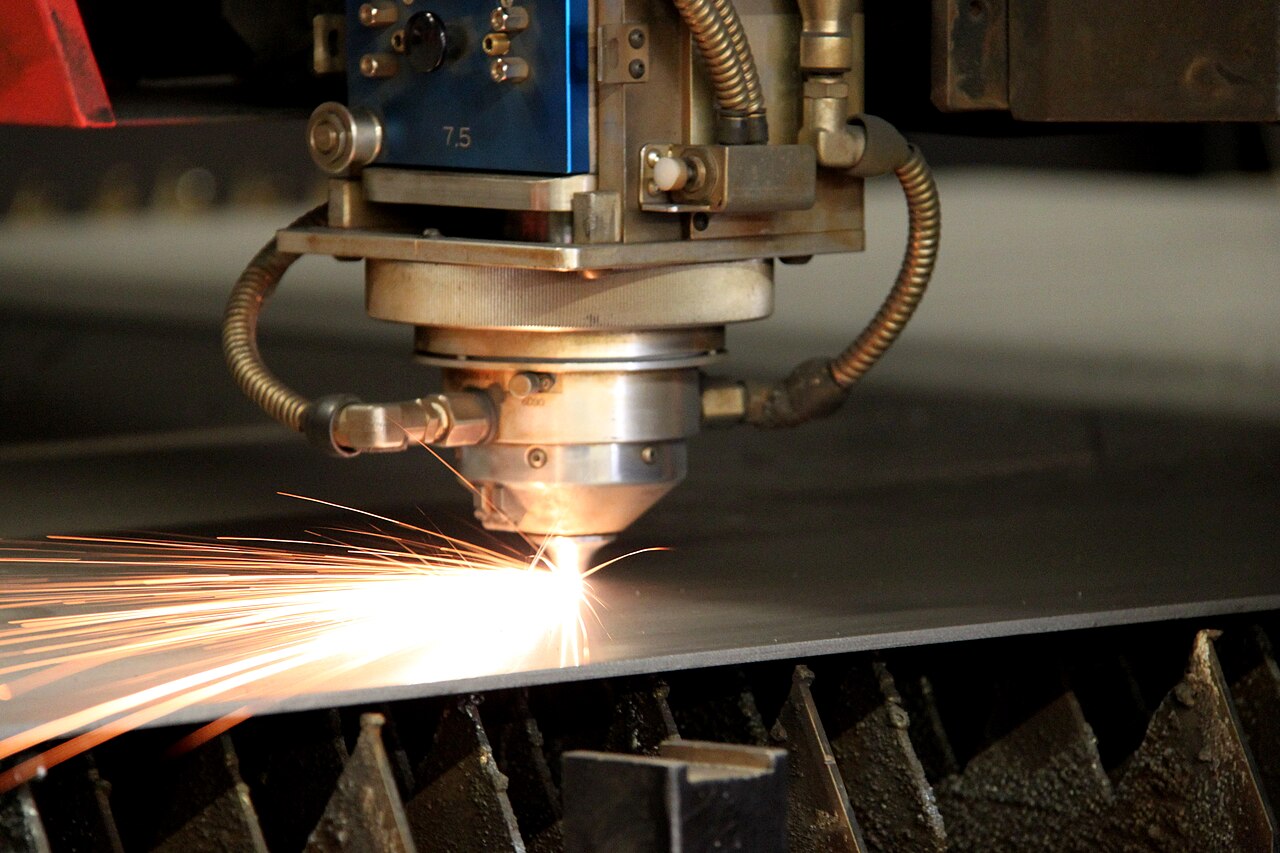
Featured photo: The cutting head of an Amada FO-4020NT 4 kW industrial laser cutting sheet metal. Jasper84 (Contour), CC0, via Wikimedia Commons.