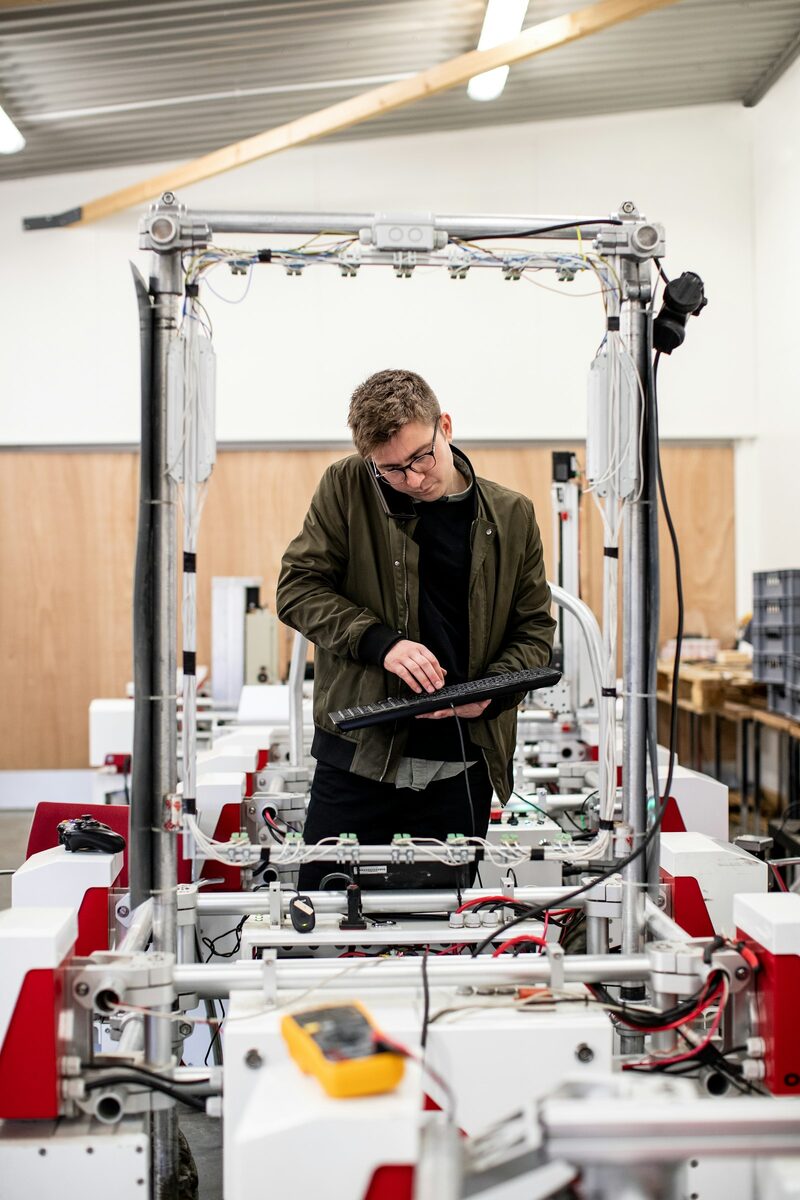
Greenheck Group has selected Critical Manufacturing MES to standardize shop-floor execution across a global HVAC footprint spanning the United States, Mexico, and India. The air-movement maker—fans, dampers, louvers, kitchen hoods, energy-recovery units—runs hundreds to thousands of configure-to-order variants a day and needed one live view of production instead of site-by-site tools.
Today’s stack is a mix of in-house programs, SAP-based tooling, and third-party apps that differ by plant. That patchwork broke visibility and made aggressive delivery guarantees hard to defend. Critical Manufacturing won on configure-to-order support, open architecture, flexible UIs, out-of-the-box depth, and SAP integration that can carry product variants without a customization factory.
The selection was deliberate. Greenheck’s internal team wrote detailed requirements, issued RFIs, ran technical assessments, then hosted multi-day on-site workshops with three shortlisted vendors. Kevin Rell, Sr. Director of IT Operational Technology, put the bar plainly: a system that shows what is happening across manufacturing and supports the variation in Greenheck’s lines. The program starts with a single-factory pilot, then phases across eight to nine campuses covering more than thirty facilities, with IoT connectivity scoped for long-term productivity.
Internally, Greenheck frames the same clock: replace Manufacturing Integration and Intelligence (MII)—plus years of bolted-on programs—with one MES that sits cleanly on SAP and the machines. SAP ends MII support at the end of 2027; the MES program targets completion in FY28, starting with the RTU business unit in October. Elsewhere this season, Critical Manufacturing is also pushing AI copilots inside MES at SEMICON India 2026—natural-language dashboards on the same execution core—while mid-market shops keep buying execution visibility for the same reason Greenheck did: production versus downtime, not another report.
Jeff Peabody of Critical Manufacturing North America called out real-time visibility and consistency as the point of the deal; Critical Manufacturing already counts HVAC and industrial names like Daikin, Danfoss, and Alfa Laval. For N23D, Greenheck is the multi-site MES lesson in plain language: when variants, IoT, and ERP meet thirty plants, a bolted MII estate collapses under its own site copies. N23D’s contract is one native Rust binary across MES, ERP, and CCB—so order, WIP, machine event, and change share identity from day one, and standardization is not a three-year integrator novel.
Sources/References
- ManufacturingTomorrow — Greenheck Group selects Critical Manufacturing MES (September 9, 2026)
- Greenheck Group — MES Platform: A Competitive Advantage for our Team
- ELE Times — Critical Manufacturing MES / AI copilots at SEMICON India 2026 (September 9, 2026)
- Critical Manufacturing — Manufacturing Operations Platform
- N23D — MES stack page
- N23D — ERP stack page
- N23D — CCB stack page