
Campfire Interactive, the Ann Arbor company whose software manages more than $250 billion in Tier 1 and Tier 2 automotive supplier revenue across 9,000+ users, shipped a new platform release on Oct. 14 built around one blunt line from CEO Alex George: suppliers “don’t lose margin on the plant floor. They lose it in the quote, the contract and the forecast, long before the first part ships.” His diagnosis is that CRM was built for selling, ERP was built for running the plant, and nobody built for the commercial work in between.
The release goes straight at that gap. RFQs are pulled from the inbox automatically, and every opportunity gets a part-level forecast. Variance reporting compares what was projected with what actually happened and flags why. The CPQ module builds a full cost breakdown and business case for each quote from centralized cost standards and rate tables, tracks engineering changes for their cost and pricing impact, and imports BOMs automatically so a new quote does not start from re-keying.

The most useful piece for anyone with steel, aluminum or resin in the bill is Price Index Management. It pulls the latest material indexes, applies each OEM’s escalation formula across every program, and flags exceptions. Upload a contract and the AI extracts the materials, the recovery clauses and exactly how much is owed; each exception can be reviewed, overridden, or pushed straight to the ERP the supplier invoices from. Supplier Intelligence adds a should-cost forecast for any RFQ or part and a negotiation plan with an opening ask, target price and walk-away number.
Under the hood, AI BOM ingestion maps multi-thousand-line Excel BOMs and fills gaps using similar parts already in the system, and program management carries APQP from award to completion. “Suppliers don’t need another chatbot,” said Luke Molnar, Campfire’s SVP of Engineering. “They need the RFQ in their inbox to become a reviewed quote.” The same week, MindPal launched a quoting engine for machine shops and fabricators that turns STEP and DXF files into itemized quotes covering material, cycle time, margin and lead time in about 30 seconds, with two-way sync to CRM and ERP.

Both launches point at the same weak joint. The quote is where engineering data, cost data and sales data collide, and at many suppliers it still lives in a spreadsheet stitched between a CRM and an ERP. Campfire’s own site claims 20 to 40 percent faster quoting cycles; whatever the exact number, a quote built on a stale BOM or a missed escalation clause is margin lost before the purchase order arrives.
For N23D, the lesson is that CRM cannot be a contact list sitting beside the real system. The RFQ, the quote, the BOM from PLM, the cost model and the index clause belong on the same record that ERP invoices from and the shop builds against, so an engineering change shows up in the price before the customer signs. When sales and engineering share one record, the margin stops leaking in the gap.
Sources
- Campfire Interactive Launches New AI Capabilities to Help Automotive Suppliers Protect Profitability, EIN Presswire (Oct. 14, 2026)
- Campfire Interactive, The Profit Intelligence Platform for Automotive Suppliers
- MindPal Launches AI-Powered Metal Sheet Quoting Engine, MindPal (Oct. 12, 2026)
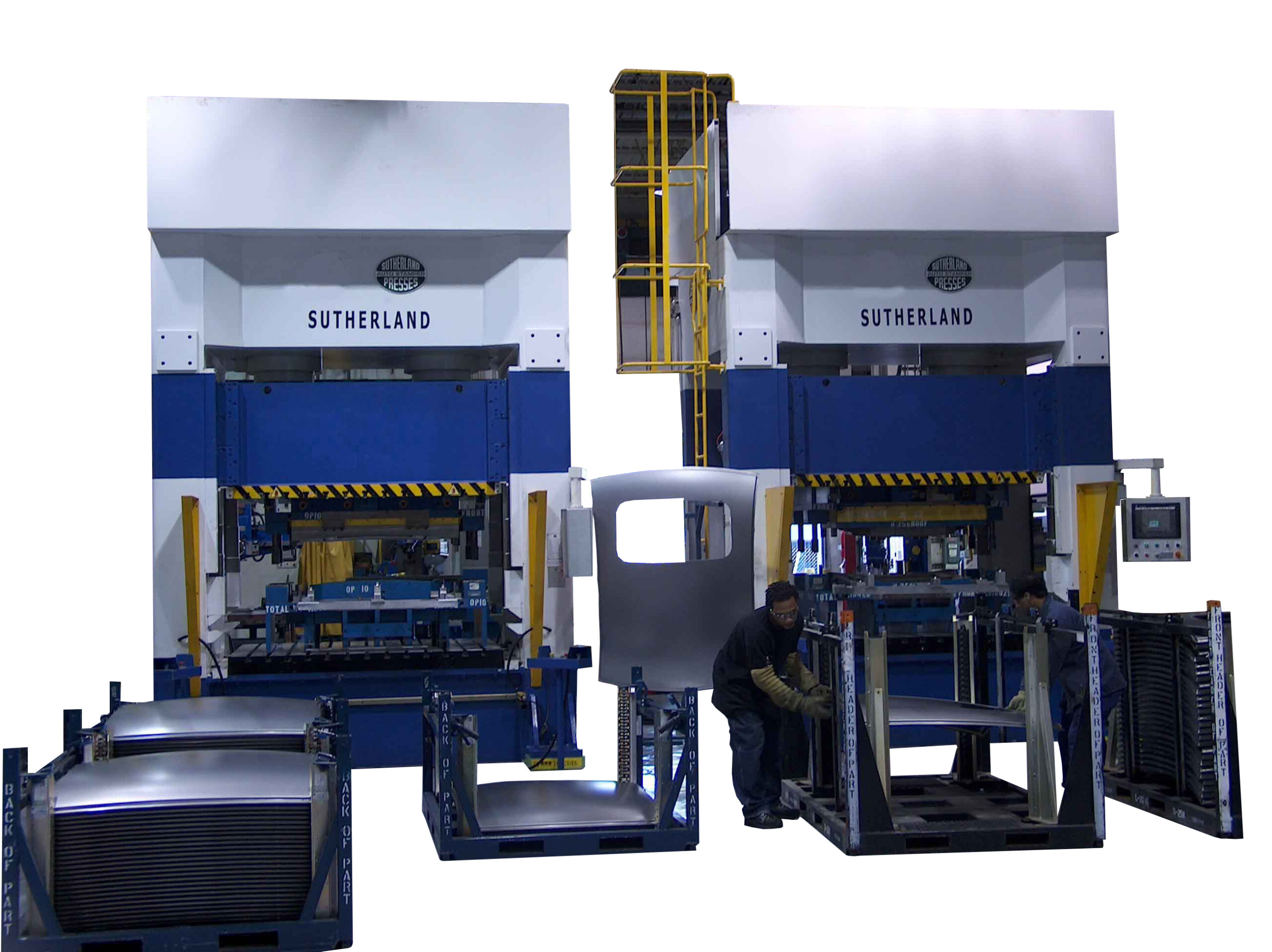
Featured photo: HD2-550 x 2 for Automotive Sunroof Production by Sam D. Wilbur, CC BY-SA 4.0, via Wikimedia Commons.
