Most manufacturers already know why their products fail in the field. The answer is sitting in a support ticket, a warranty claim, a service tech’s notes and a box of returned parts on a shelf by the receiving dock. The problem is that none of those places is where the next revision gets designed.
The help desk runs on one vendor’s system, warranty lives in ERP, the corrective action sits in a quality tool, and the CAD model is in PLM. Each one has its own ID for the same part. So a cracked bracket comes back as “customer reports noise” in one system, a credit memo in another, and a nonconformance in a third, and the engineer who could fix it never sees the three together. The next build ships with the same bracket.
That isn’t a training problem or a culture problem. It’s what happens when the record of what failed and the record of what was designed don’t share a key. A closed loop between the field and engineering is impossible to run by hand across thirteen systems, so in practice it isn’t run at all.
N23D puts the ticket in TIX, the customer in CRM, the nonconformance in QMS and the revision in PLM on the same part identity, so a returned bracket points straight at the released CAD revision that built it. One platform. Full digital thread. If your failure data can’t find its drawing, it will fail again.
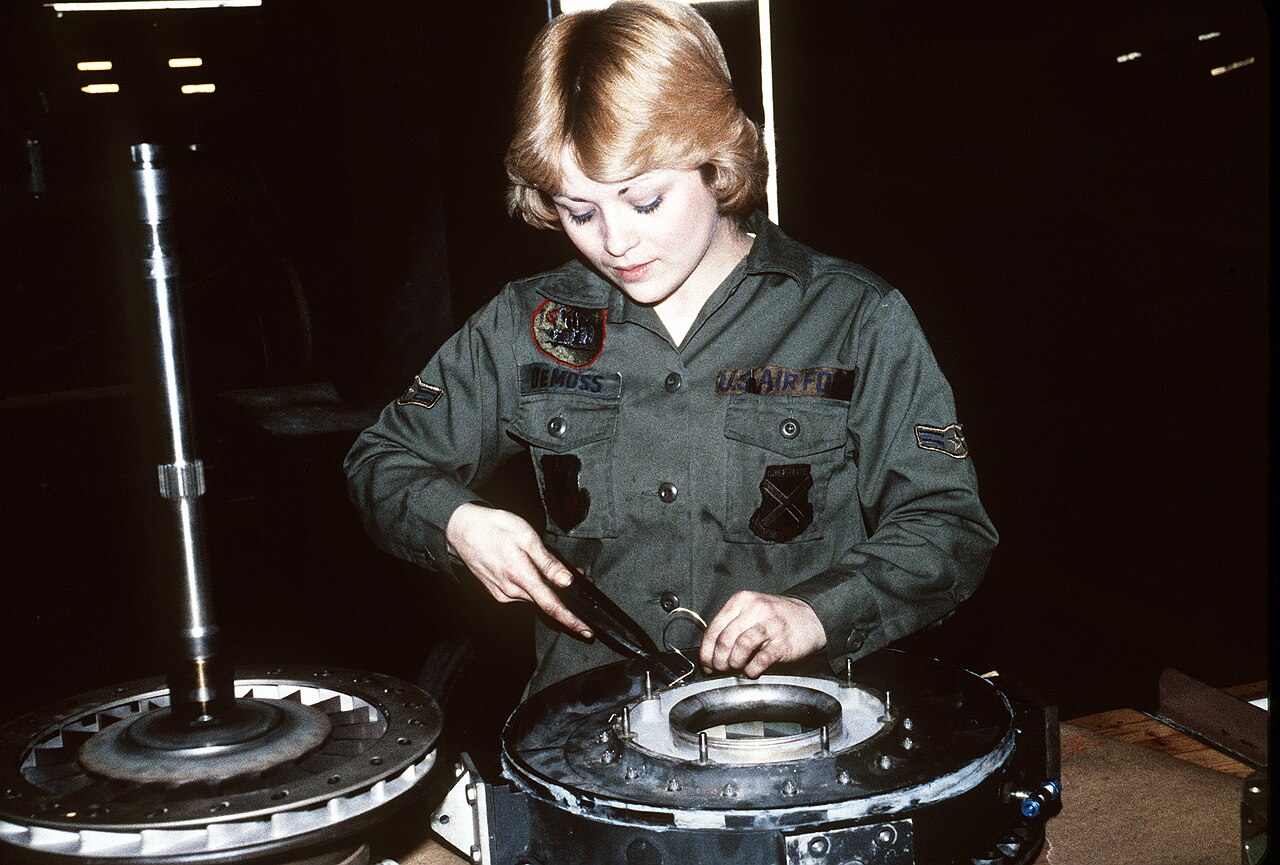
Featured photo: A jet engine technician with the 37th Component Repair Squadron works on jet engine parts, George Air Force Base, California, Oct. 26, 1983. U.S. Department of Defense photo by Sgt. Jeff Valco, public domain, via National Archives and Wikimedia Commons.
