Open a part in most manufacturing stacks and you get a CAD file. Geometry lives there. The toolpath is a separate CAM project. Density and heat-treat notes sit in a materials database or a spreadsheet. Surface finish, tolerance class and supplier preferences live in a PDM attribute dump or a drawing note. Getting a complete picture of one part means opening four programs and hoping the filenames still match.
That split is how shops end up nesting yesterday’s DXF, running a toolpath against a superseded blank, or quoting a density that no longer matches the released alloy. The “part” is not a record. It is a folder of exports that people try to keep in sync by hand.
In N23D, a part file opens with tabs for Geometry, CAM, Materials and Part Properties on the same identity. Change the alloy on the Materials tab and mass properties update on the same record. A CAM operation reads the released blank and stock that Geometry and Materials already define. PLM revision and QMS inspection characteristics point at that one part, not at a renamed copy. One Rust binary. One vault. CAD, CAM and MAT share it.
One platform. Full digital thread. If answering “what is this part?” means hunting through a folder of exports, you do not have a part record — you have a scavenger hunt.
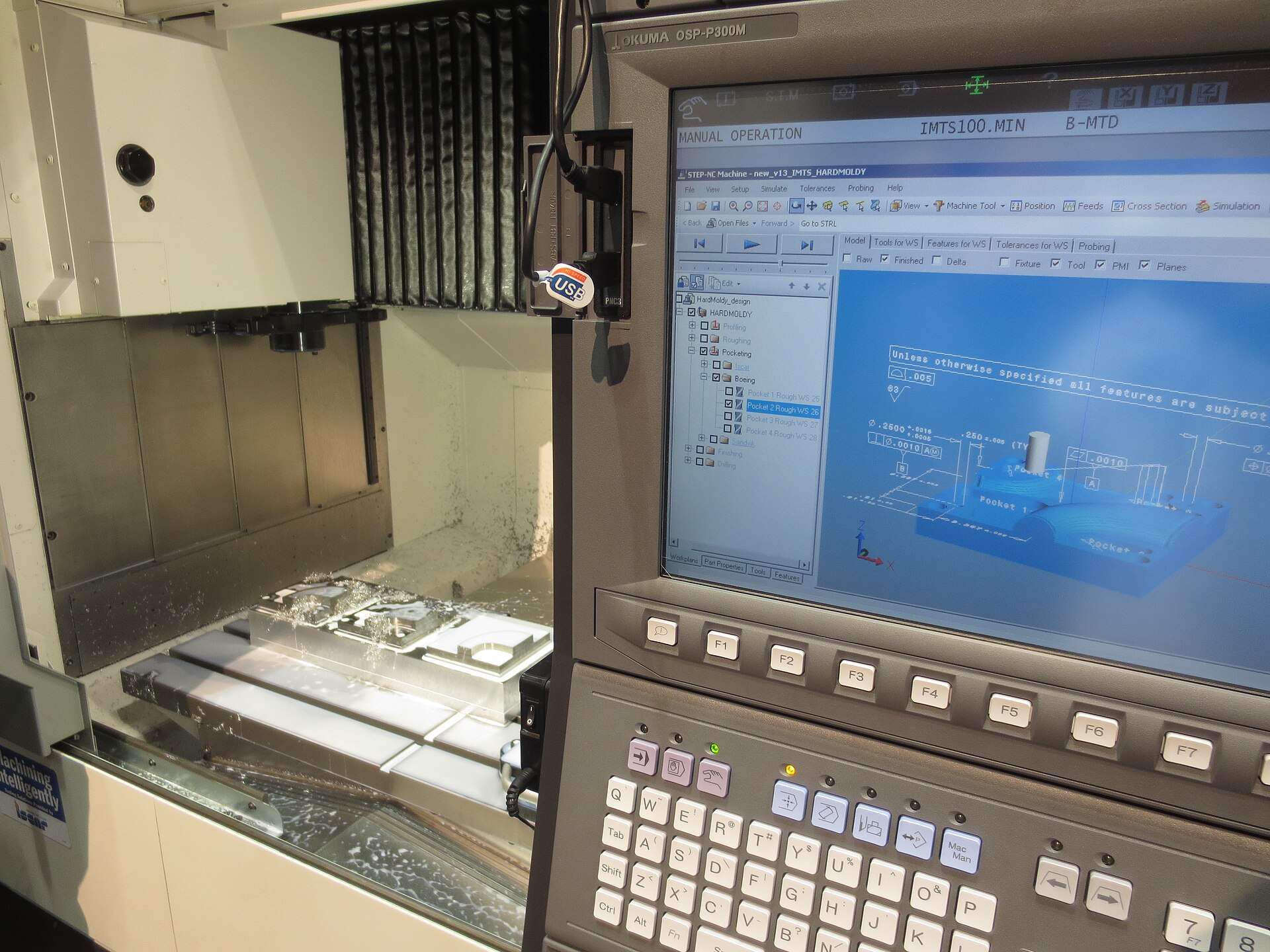
Featured photo: STEP-NC machining demonstration on an Okuma CNC at IMTS 2014. Loffredo, CC BY-SA 4.0, via Wikimedia Commons.