Electric vehicles lose the engine noise that used to mask gear whine and motor tones, so noise, vibration and harshness (NVH) teams are asked to predict cabin sound before a drivable prototype exists. That prediction is only as good as the component models fed into it. On Nov. 5, Siemens announced automated component model extraction, built with Bosch on Bosch’s patented predictiveVIA technology, which it says cuts frequency response function (FRF) measurement time by up to 93% while following the ISO 20270 blocked-force standard. It ships as part of Simcenter Testlab 2606 with Simcenter SCADAS and Qsources hardware.
The key is a self-measuring fixture: shakers and accelerometers stay mounted on rigid adapters, so nothing is glued to the part under test and the next unit simply bolts on. In a published SAE study on an electric power steering system, collecting the 24 FRF sets needed for blocked forces took 16 minutes, against about 4 hours 48 minutes with a roving shaker and about 4 hours with a roving hammer. Siemens says a job that took a specialist days now takes a lab technician about 20 minutes. The method also flagged a deliberately defective steering unit, and the predicted noise at the driver’s ear matched in-vehicle measurements.
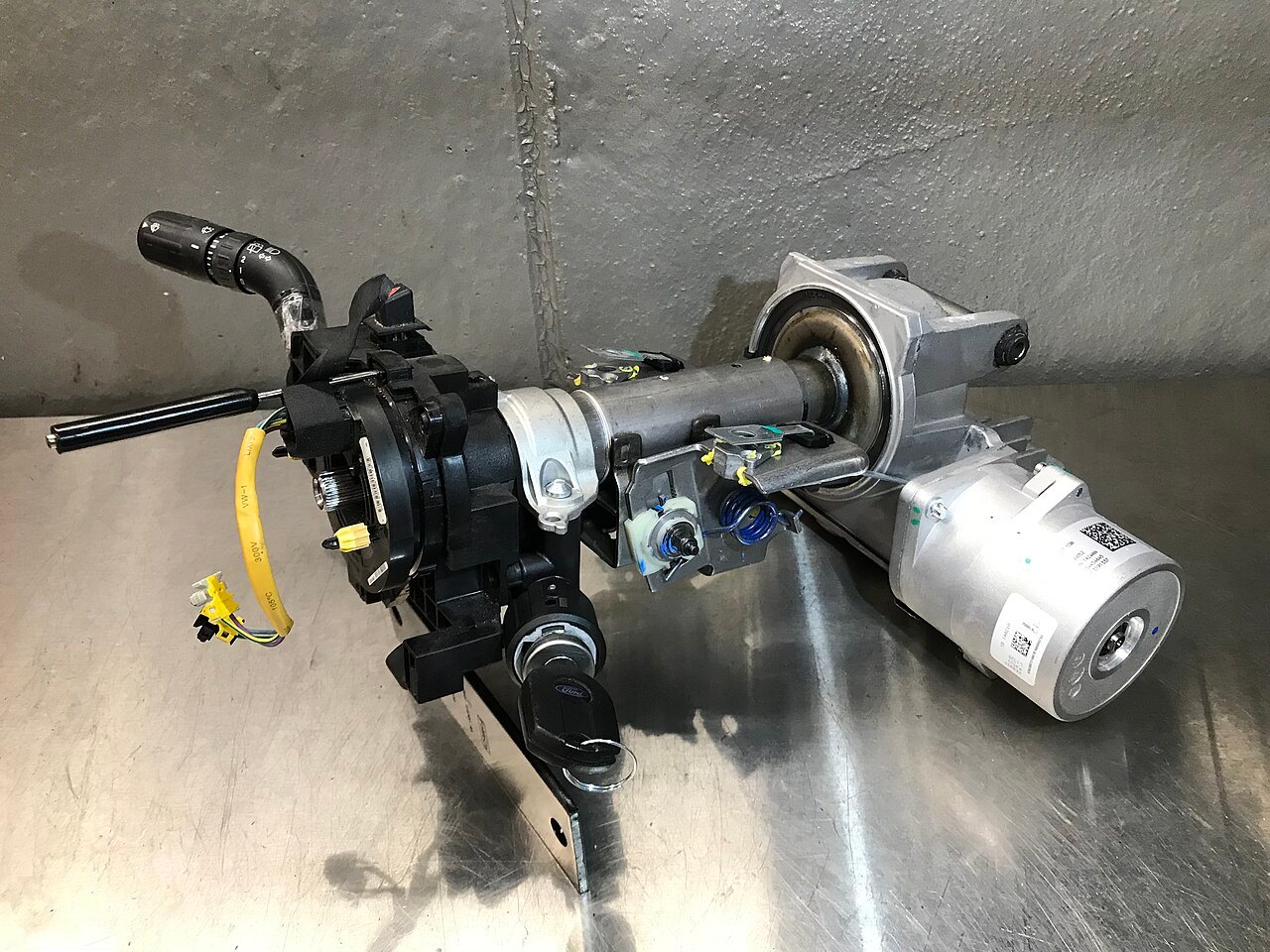
Siemens notes that major automakers increasingly write blocked-force limits into supplier contracts as the NVH interface. A force measured this way depends only on the component, not the vehicle it bolts into, so a supplier can characterize a motor or pump once and an OEM can drop it into any vehicle model. Faster testing also lets suppliers measure ten or more samples a year and see real part-to-part spread instead of measurement scatter.
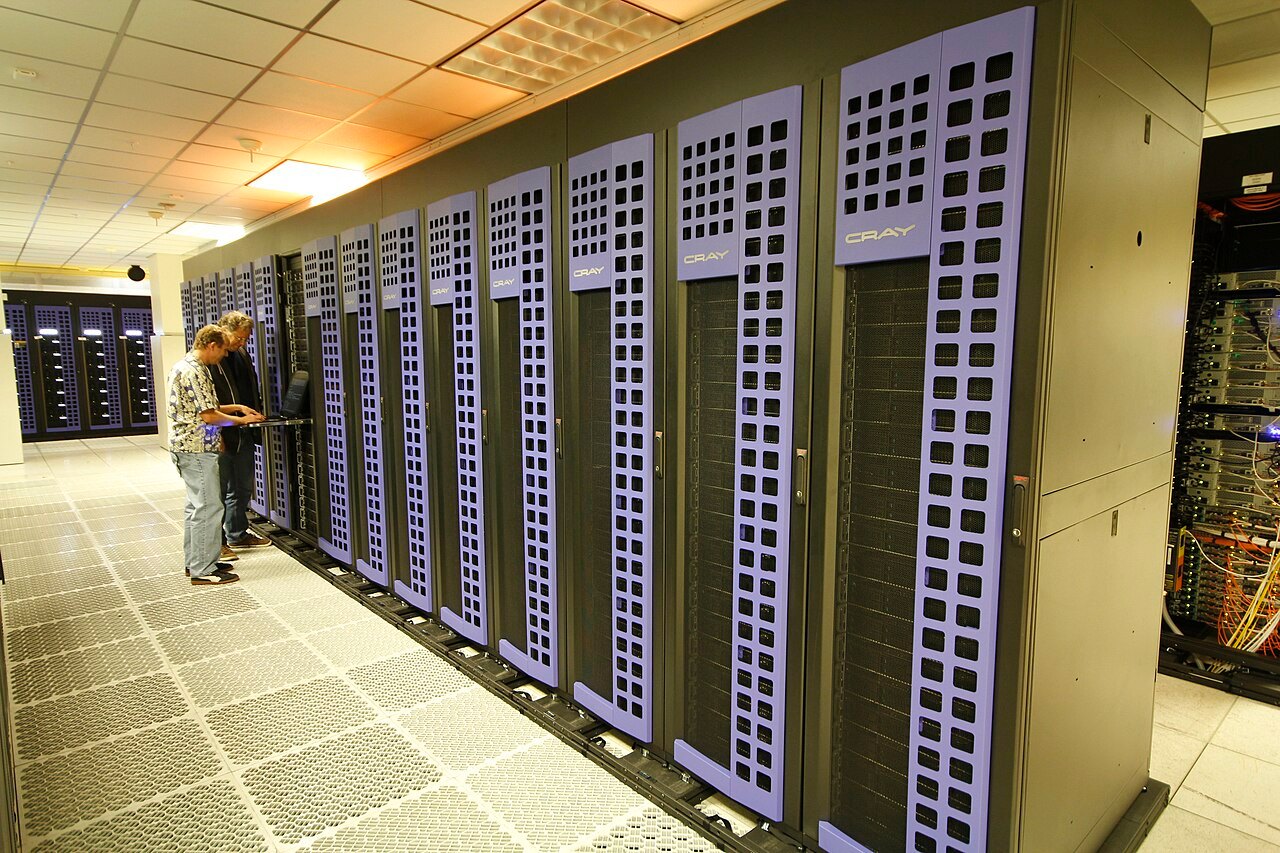
The rest of the week’s simulation news was about who runs the jobs. Ansys HPC Platform Services, from Ansys, now part of Synopsys, gives engineers, IT teams, custom Python apps and AI agents one way to submit, monitor and retrieve jobs across workstations, clusters, clouds, CPUs and GPUs. It sits on top of existing schedulers including Slurm, PBS Professional, Altair Grid Engine, IBM LSF and Kubernetes, and handles parametric studies, design points and job dependencies. On Nov. 10, Siemens introduced the HyperLynx Agentic Toolkit, where an orchestration agent coordinates specialist agents for SerDes, DDR, signal integrity and power integrity, runs the simulations and checks results against design margins. Early access starts with select customers in the fourth quarter. Dassault Systèmes will show its own agent, LEO, which sets up, runs and analyzes simulations, at the SIMULIA R2027x keynote on Nov. 20.
Taken together, the slow part of simulation is shifting from the solver to everything around it: getting trustworthy test data, queuing thousands of runs and setting up verification correctly. Agents and automated fixtures speed that up, but every result still has to answer the same questions. Which part, which revision and which serial number was measured, and which design did the simulation actually check?
In N23D, CAE results, test measurements and the jobs that produced them live in the same Rust application as PLM and QMS. A blocked-force model is stored against the supplier’s part number, revision and the serial numbers that were tested, so a vehicle-level noise prediction shows exactly which component data it used. A defective unit like the one in the Siemens study opens a nonconformance, and when the part revision changes, every simulation that depended on the old data is flagged for rerun.
Sources
- Siemens’ new automated component model extraction to cut NVH test time from days to hours, Siemens (Nov. 5, 2026)
- Industrializing component characterization for virtual NVH development: AutoCMX, Siemens Simcenter blog
- Ansys Brings Scattered HPC Resources Into One Simulation Workspace, ENGtechnica (Nov. 3, 2026)
- Siemens’ HyperLynx brings physics-validated agentic AI to electronic systems verification, Siemens (Nov. 10, 2026)
- Industrial AI You Can Trust, Dassault Systèmes SIMULIA blog (Nov. 5, 2026)
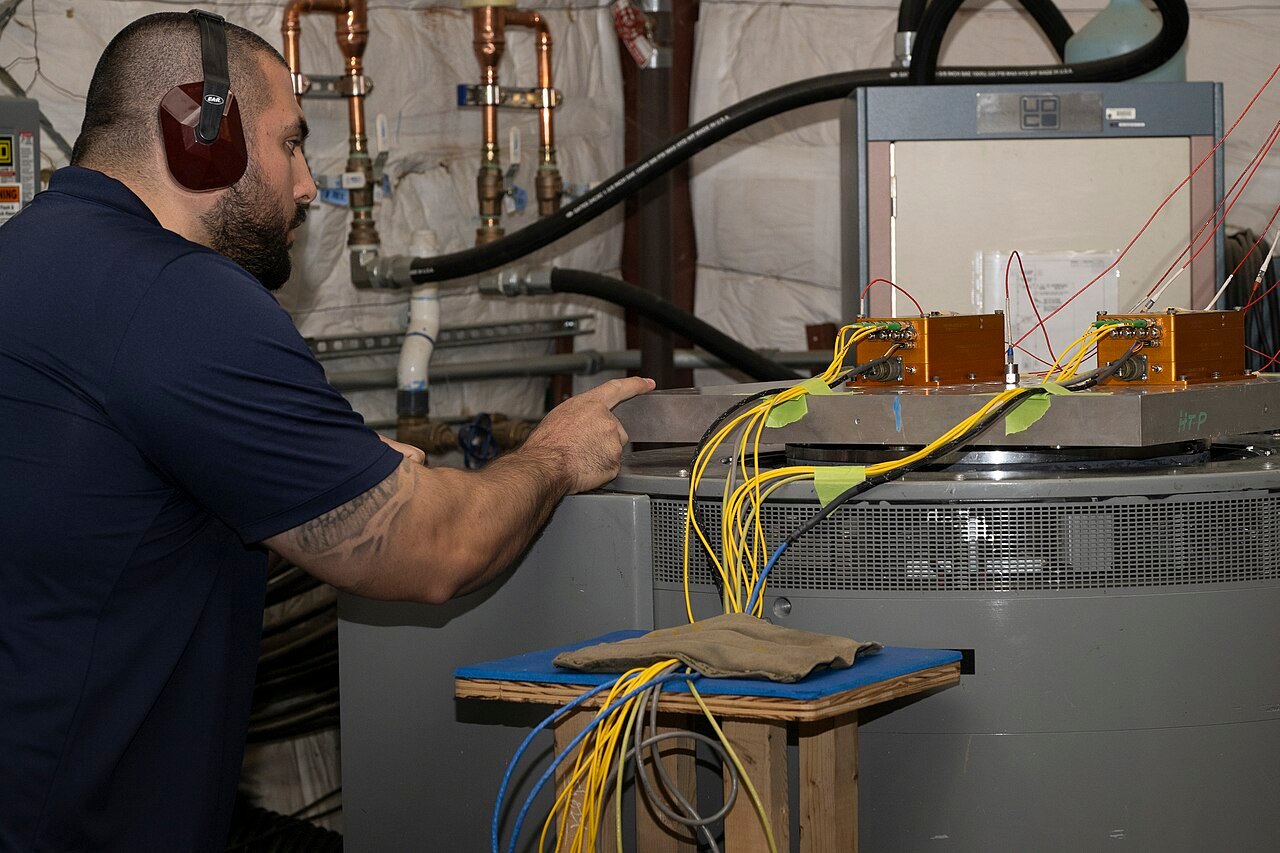
Featured photo: Jonathan Lopez prepares a hypersonic fiber optic sensing system for vibration tests in the Environmental Laboratory at NASA’s Armstrong Flight Research Center. Photo by NASA/Jim Ross, public domain, via Wikimedia Commons.