Most service work still reaches the office as an email, a PDF or a customer’s photo, and someone has to type it into the job system before a technician can be scheduled. Simpro Group puts that admin load at about 18.5 hours a week per trade business, by its own internal benchmark, in a sector where it says average net margins run around 6%. Its answer is JustDo, an AI operations agent built into Simpro Lightning, BigChange Lightning and AroFlo Lightning, with early access opening Nov. 9. An emailed repair request or a homeowner’s photo of a leaking boiler becomes a draft job, and JustDo checks first whether the customer already exists.
JustDo also starts quotes from an email, a PDF or a single sentence, raises purchase orders on jobs that need materials, creates tasks in bulk and checks completed job cards before they go to the customer. It works through the platform’s APIs and inside each user’s existing permissions. Every action is previewed, anything sensitive or hard to undo waits for approval, and a side panel shows what the agent is doing and why. IT Brief reports that in a UK YouGov survey Simpro cited, 30% of trade respondents named customer-affecting errors as their main worry about AI. Simpro Group serves more than 24,000 trade businesses, and JustDo runs on credits.
BuildOps went after the work that falls between visits. Its Service Agents, introduced Nov. 5, include a Revenue Agent that finds issues technicians flagged that nobody acted on, jobs that were never quoted and quotes that went quiet, then drafts the follow-up. A Service Coordinator Agent reads every tech note and visit, flags what is stuck and points out billable work hiding in those notes. A Billing Agent applies each customer’s billing rules and builds the invoice. BuildOps says the agents surface recommendations and drafts, and the team makes the final call.
Other tickets now start from machine data. Motive’s Agents, launched Nov. 9 for HVAC, plumbing, pest control and landscaping fleets, can flag a critical fault code, explain its severity and open a work order in Motive Maintenance. MaintainX’s November release adds meter-driven maintenance plans that create work orders from miles, engine hours, runtime or cycles, or from a calendar date, whichever comes first. Fixed intervals stay on set milestones such as every 5,000 miles even when work runs late, which suits warranty and OEM rules, while floating intervals count from the last completion. A fleet can generate each work order 500 miles early so parts are ordered in time, and the work order records which trigger created it and the reading at that moment.
Across all four releases, the ticket now starts from the source data, whether that is an email, a technician’s note, a fault code or a meter reading, instead of someone retyping it, and a person still approves anything that touches a customer or an invoice. The open question is what the agent can see. A draft job in a field service tool rarely knows the revision of the part that failed, the quality history of that serial number or whether a field fix needs an engineering change.
In N23D, TIX tickets live in the same Rust application as MES, QMS, ERP and the customer service portal. A meter reading, a fault code or a customer’s photo opens a ticket against the asset’s serial number and as-built configuration, so the technician sees the exact revision installed and its open nonconformances. An agent can draft the ticket, the parts list and the invoice, but it uses the same records and permissions as a person, and nothing goes to the customer until someone approves it.
Sources
- JustDo: AI office assistant for field service businesses, Simpro Group
- Simpro launches JustDo AI agent for trade businesses, IT Brief (Nov. 11, 2026)
- Welcome BuildOps Service Agents: Revenue, Service Coordinator, and Billing, BuildOps (Nov. 5, 2026)
- Motive Launches AI Agents That Help Field Teams Act Before Problems Start, Motive (Nov. 9, 2026)
- What’s New at MaintainX: November 2026, MaintainX (Nov. 2, 2026)
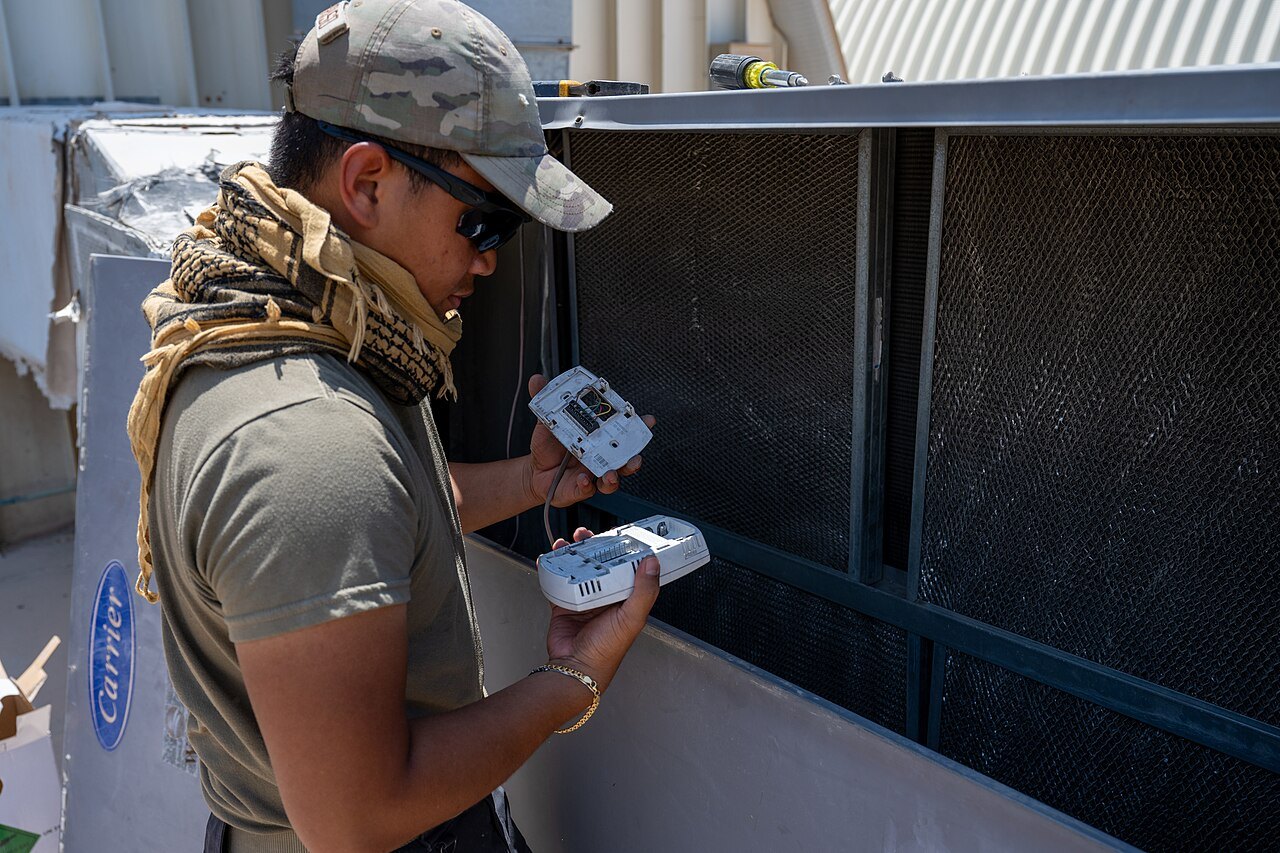
Featured photo: An HVAC technician with the 379th Expeditionary Civil Engineer Squadron checks an air conditioning unit in the U.S. Central Command area, June 2024. Photo by the U.S. Air Force, public domain, via Wikimedia Commons.