The FDA’s Oct. 7 warning letter to Olympus Medical Systems covers six plants: Hachioji, Hinode, Aomori and Shirakawa in Japan, Hamburg in Germany and Brooklyn Park in Minnesota. One finding stands out. Olympus received 325 complaints about pressure sensor and front panel failures on its UHI-4 insufflator between November 2020 and October 2022, but did not trend or escalate them, and the FDA says a CAPA was not opened until the agency asked. The letter cites a confirmed patient death and a 2023 Class I recall of UHI-4 units. On Oct. 20 the FDA told health care providers it had widened an import alert on Olympus devices made in Japan, adding a capsule endoscope set, a small-intestine videoscope, a deflectable videoscope and two bronchoscopes to a list that started in June 2025.
Most of the 12 numbered violations are about records that should have been linked and were not. At Brooklyn Park, a CAPA opened in August 2024 for a supplier whose quality rate missed its target for more than three months was closed in October 2025 with no corrective action, and the KPI that flagged the problem was eliminated. At Aomori, Olympus logged more than 1,000 complaints about deformed wires on a sphincterotome, 24 of them reportable to the FDA, and the CAPA task to fix the process for U.S. product was cancelled because it would have delayed closing the CAPA. Brooklyn Park’s complaint trending still used medians and control limits recalculated every month, a method picked in 2020 because of COVID-era data and never reassessed.
The design side had the same gaps. The FDA says Hachioji had no design traceability matrices for six product lines, including Evis Exera III bronchovideoscopes and its endoscope reprocessor, even though its own procedure required them. At Brooklyn Park, a tray sealer’s qualification passed only at the nominal setting of 232°F, 115 PSI and 4.5 seconds, while production ran at 253°F, 118 PSI and 4 seconds. At Hinode, three CAPAs over three years addressed wrinkles in sterile barrier seals without fixing the validation method behind them. Olympus said it has run a multi-year quality transformation and will answer within 15 business days, and in an investor notice it said the import alerts will not change its guidance for the year ending March 31, 2027. Any fix it makes now has to meet the QMSR, the FDA rule that took effect Feb. 2, 2026 and incorporates ISO 13485:2016.
The same month, Honeywell made generally available an AI Processing Agent in TrackWise Digital that processes customer complaints for life sciences manufacturers. Honeywell says it has run in production for five months at a medical device maker, handling thousands of complaints a day, and cites research that 70% of medical device recalls trace back to quality issues found through customer complaints. The Olympus letter shows the limit of faster intake. Brooklyn Park moved to its current TrackWise system in November 2024, but the FDA notes that its trending still draws on 24 months of history in which some complaints were coded “no investigation is required” and never investigated.
Each of these findings is a broken link between two records: a complaint trend that never became a CAPA, a CAPA closed without proof it worked, a design change made without revalidation, a recall scoped to supplier lots after the root cause turned out to be an assembly error. In the Powerseal case, the FDA says the recall scope was never revisited when the root cause changed. Three questions follow for any quality team. Can a CAPA close in your system without a recorded check that the action worked? When a root cause changes, does the recall scope get reopened automatically? And is the statistical method behind your complaint trending written down with a reason someone reviews?
N23D is designed so those links are part of the data rather than left to procedure. QMS runs in the same Rust application as PLM, so a complaint taken in through TIX points at the exact part and revision, a CAPA cannot close without a verification-of-effectiveness record, and a design change approved through the change control board flags every validated process in MES that it touches for revalidation. The trending method is stored as a controlled record with its rationale, so a choice made in 2020 shows up for review instead of running unchanged for five years.
Sources
- Warning Letter CMS #729208 to Olympus Medical Systems Corporation, U.S. FDA (Oct. 7, 2026)
- Update: Import Alert for Certain Olympus Medical Devices Manufactured in Japan, Letter to Health Care Providers, U.S. FDA (Oct. 20, 2026)
- Olympus Receives FDA Warning Letter, Olympus (Oct. 13, 2026)
- Notice Regarding Issuance of Import Alerts by FDA, Olympus Corporation investor relations
- Quality Management System Regulation (QMSR), U.S. FDA
- Honeywell Technologies Introduces Agentic AI Functionality for Life Sciences Manufacturers, Honeywell (Oct. 21, 2026)
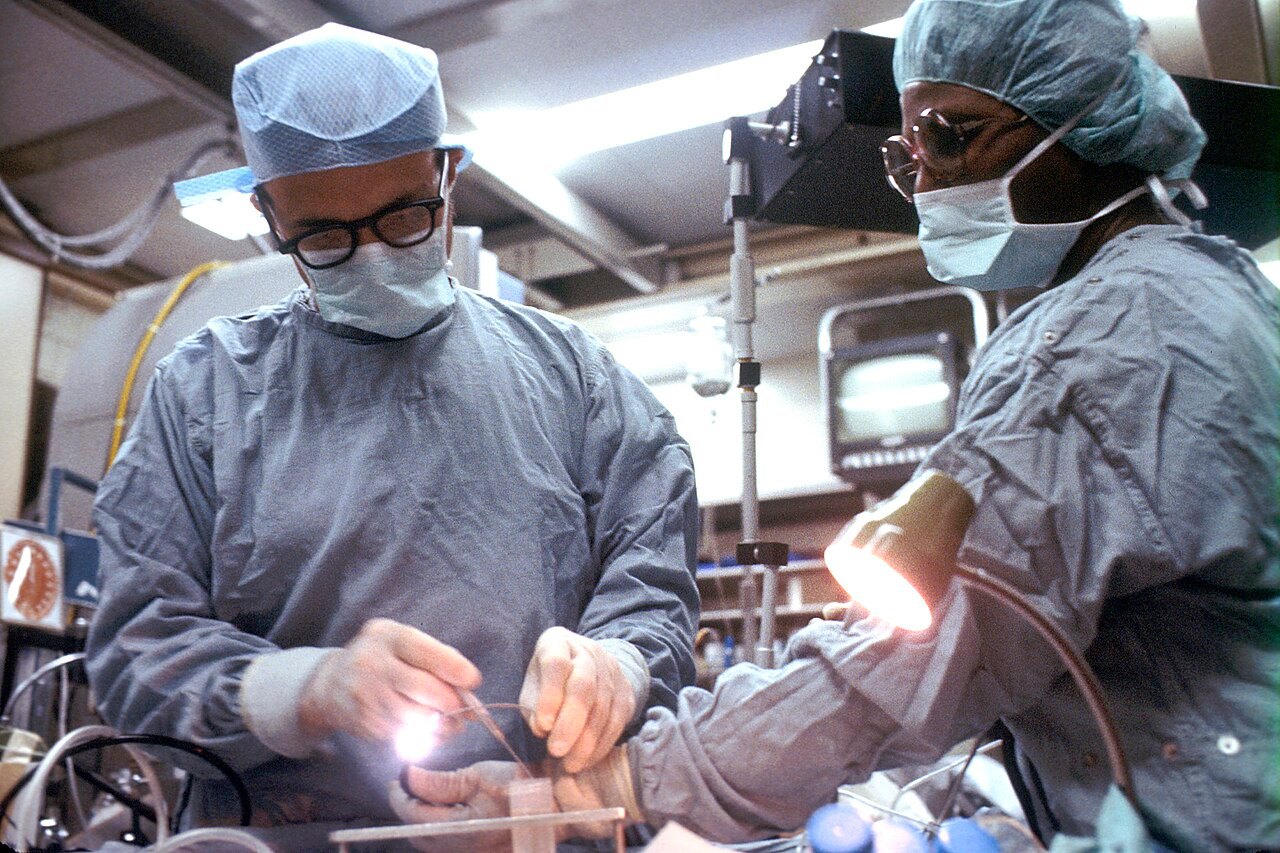
Featured photo: Physicians performing a bronchoscopy. Photo: National Cancer Institute, public domain, via Wikimedia Commons.