SunCubes said on September 2 that it is using SimScale’s Engineering AI to develop laser-based charging for drones in flight and at remote stations. The substantive CAE story is not the laser alone: the team is putting thermal, structural and aerodynamic analysis around a moving wireless-power link.
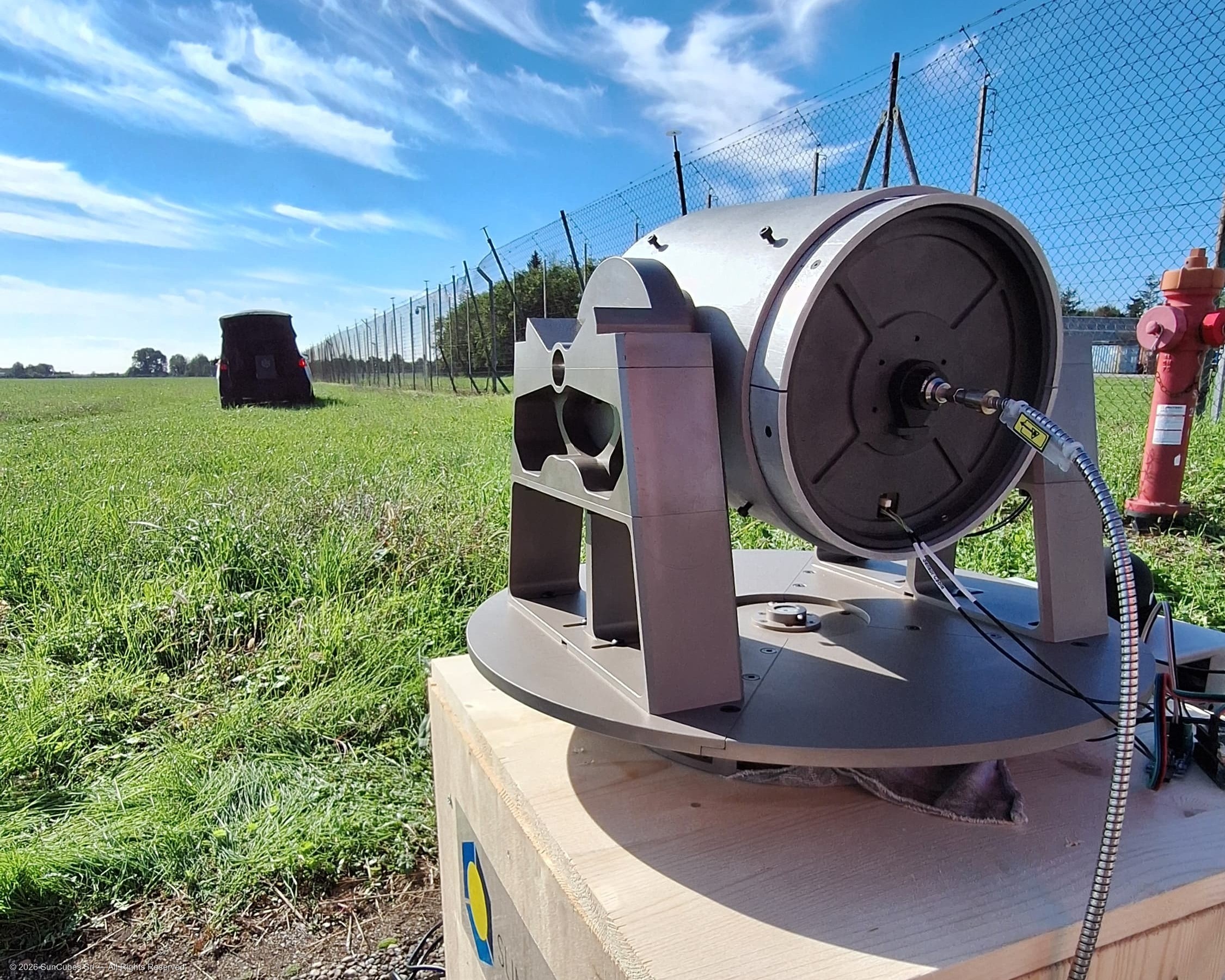
That coupling matters because SunCubes has already reported a 600-meter static transmission test at Leonardo’s Venegono facility. Going from a fixed target to an aircraft means the model must survive attitude change, beam wander, heating, structural motion and aerodynamic loads at once.
A 2026 multiphysics study of UAV laser wireless power transfer shows why this is a serious simulation problem. Its coupled transmitter–beam–photovoltaic model found that distance, pointing error and vehicle attitude reshape illumination on the receiver rather than merely reducing it by one tidy scalar.
In that study, a 45-degree radial attitude produced a 32% electrical mismatch loss, while the tested 20-millimeter, 45-degree pointing-error condition cut system efficiency by 48%. Those are research results, not performance figures for SunCubes, but they define the kind of sensitivity an AI-assisted CAE workflow must expose before flight testing.
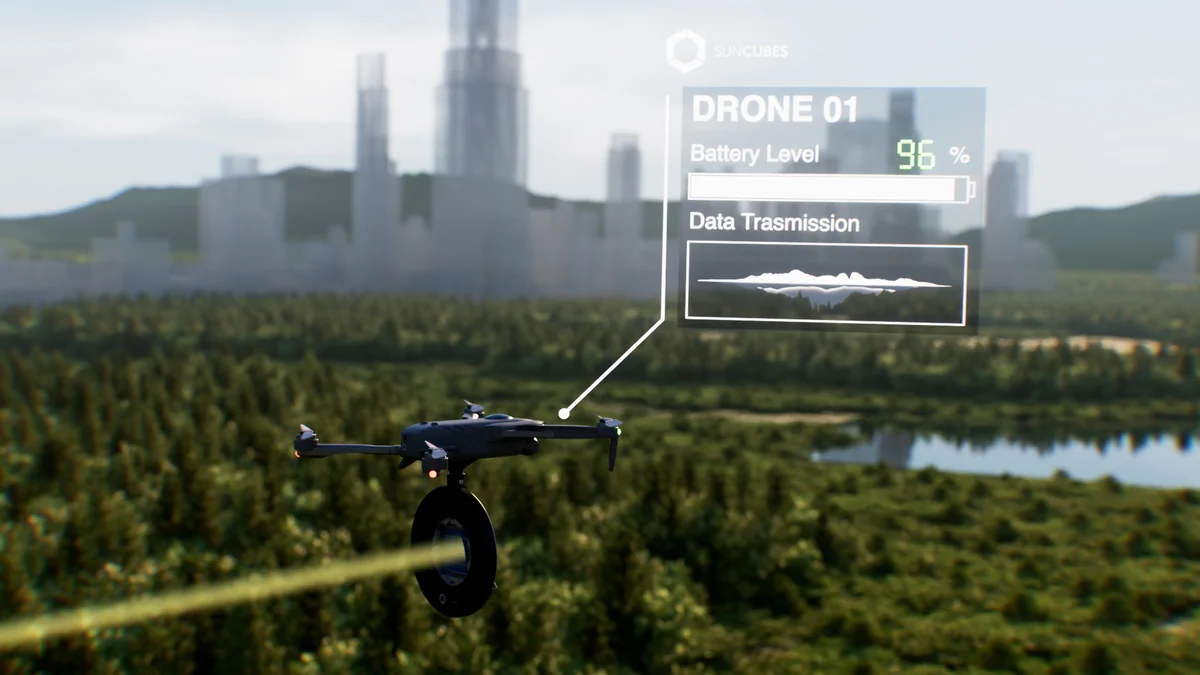
The promise of agentic simulation is faster setup and interpretation for a small hardware team, not the removal of physics or verification. Engineering.com’s report appropriately says the system “could” enable in-flight recharging and that simulation can reduce the need for some physical prototypes—not eliminate test evidence.
For CAE inside N23D, this is the useful pattern: geometry, loads, thermal fields, structures, aerodynamics and test results should remain one traceable engineering thread. AI can accelerate the loop, but every prediction still needs its assumptions, training domain and validation status attached.
Sources/References
- SimScale — SunCubes deploys Engineering AI for laser-based drone charging (September 2, 2026)
- Engineering.com — SunCubes uses AI simulation to develop UAV charging systems (September 2, 2026)
- SunCubes — 600-meter laser power transmission test at Leonardo Venegono
- Space Solar Power and Wireless Transmission — Energy performance optimization for a UAV-based laser wireless power transfer system (2026)


Leave a Reply